You inhabit the rare and powerful intersection where radical imagination meets rigorous discipline. In the PRISM-7 framework, this manifests as a distinct combination of high Openness and high Conscientiousness, filtered through the focused lens of Introversion. While many people can dream up novel ideas (Openness) and others can execute established procedures (Conscientiousness), you possess the dual-processor capability to do both simultaneously. You do not simply daydream; you blueprint. You do not merely work; you optimize. For you, an idea is only as valuable as its potential to be manifested into a functioning reality.
The lived experience of an Architect is often one of constant, background processing. You likely find that you cannot look at a system—whether it’s a subway map, a corporate hierarchy, or a kitchen layout—without immediately spotting inefficiencies and mentally refactoring them. This isn't critical judgment in a negative sense; it is an innate drive toward elegance and entropy reduction. You experience the world as a series of puzzles waiting to be solved, and your brain is perpetually running simulations to find the optimal path from A to B.
Developmentally, this archetype often emerges early in life as the child who didn't just play with toys but organized them, or who preferred complex construction sets to pretend play. You likely developed a sense of self-reliance early on, discovering that your internal world was richer and more orderly than the unpredictable social environment around you. This reinforces the Introversion aspect of your profile, not as shyness, but as a preference for the high-bandwidth processing that can only happen in solitude.
For the Architect, a typical day is less about a routine and more about a calibrated sequence of optimizations. Morning for you is rarely a groggy stumble; it is the boot-up sequence of a high-performance machine. You likely have a fixed protocol—perhaps the exact same breakfast or a specific caffeine intake timed for peak absorption—designed to minimize decision fatigue before the real work begins. Your internal dialogue as you commute or log in is a continuous stream of forecasting: anticipating potential bottlenecks in the day's schedule, mentally rehearsing the logic for an upcoming debate, or restructuring a project timeline based on new data received overnight. While others might listen to music to feel an emotion, you might listen to podcasts or audiobooks to download information, turning even your downtime into a period of data acquisition. The friction of the morning—traffic, small talk, slow elevators—is endured with a stoic patience, viewed as the 'latency' of the physical world that you must navigate before you can plug into your primary domain of abstract problem-solving.
When facing a difficult decision, your internal landscape resembles a complex Monte Carlo simulation. While others might rely on 'gut feeling' or social consensus, you retreat into a mental clean room. You strip the decision of its emotional valence and break it down into variables, probabilities, and dependencies. You run the scenario forward: 'If I choose Option A, there is a 60% probability of technical debt accruing in Q3, but if I choose Option B, the immediate resource cost spikes by 20%.' You are constantly looking for the 'Nash Equilibrium' of real life—the state where the outcome is optimized, and no resources are wasted. This process can be exhausting for those waiting on your answer, but for you, it is the only way to ensure integrity. The anxiety you feel isn't about making the wrong choice in a moral sense, but an inefficient choice in a systemic sense. The ultimate relief comes when the logic clicks into place, and the path forward becomes mathematically inevitable.
Your evening wind-down is rarely a total shutdown; it is a shift in processing mode. While an Extravert might seek a party and a high-Agreeableness type might seek deep conversation, you often seek 'competence porn'—activities that allow you to observe or enact high-level skill without the pressure of work deliverables. This might be playing a complex strategy video game, watching a documentary on engineering failures, or reading dense philosophy. You find relaxation not in the absence of thought, but in the freedom of thought. The ideal end to your day is the 'closing of the loops'—ensuring the kitchen is reset to a neutral state, the to-do list for tomorrow is compiled, and the mental cache is cleared. You sleep best when the system of your life is balanced, knowing that tomorrow’s variables have been accounted for to the best of your ability.
Typical dimensional profile for The Architect
of the population shares this personality type
In a room of 100 people, approximately 5 would share your The Architect personality type.
Systems Thinking
You naturally see how parts connect to form wholes, enabling you to design elegant, efficient solutions.
Innovation + Execution
You don't just have ideas—you implement them. This rare combination makes your contributions uniquely valuable.
Independent Thinking
You're not swayed by popular opinion and can develop genuinely original approaches.
Quality Focus
You maintain high standards and are willing to invest the time needed to do things right.
Collaboration
Your preference for independent work means you may miss valuable input from others. Practice seeking feedback earlier in your process.
Communication
Your ideas make perfect sense to you, but others may need more context. Invest in explaining your vision clearly.
Flexibility
Sometimes 'good enough' is better than 'perfect.' Learn to recognize when additional refinement has diminishing returns.
The Architect in Relationships
You show love through thoughtful gestures and building a life together. You value intellectual connection and shared goals. Give yourself permission to be more spontaneous sometimes.
You have a small circle of deep, lasting friendships rather than many acquaintances. You're incredibly loyal and show up consistently for those you care about.
You're the one who designs the systems everyone else uses. You prefer being judged on the quality of your work rather than your social presence.
See Your Compatibility with Other Types
Discover which types are most compatible with The Architect in romance, friendship, and work.
Architect Learning Style
How this type learns best
Architect Career Guide
Best career paths and workplace advice
Architect Relationships
Love, dating, and connection
Architect Communication
How to communicate effectively
Architect Stress & Coping
Managing stress and building resilience
Architect Leadership
Leadership style and management
Architect Personal Growth
Development and self-improvement
Architect At Work
Workplace dynamics and team roles
Architect Compatibility
Type compatibility and pairings
Software Architect
This is the archetypal role for your profile. It demands the ability to hold massive, abstract structures in your head (High Openness) while enforcing strict standards and protocols (High Conscientiousness). You aren't just writing code; you are designing the city plan for a digital ecosystem. You decide where the bridges go, how the utilities run, and how the system scales. The role rewards your need for deep focus and your intolerance for redundancy. Warning: Watch out for 'ivory tower' syndrome—ensure you stay connected to the code implementation realities.
A typical Tuesday involves a morning block of 'Deep Work' where you map out the microservices interaction for a new platform, completely undisturbed. You enter a flow state where the logic of the system feels like music. Around 1:00 PM, you lead a technical review board where you dissect a junior engineer's proposal, gently but firmly pointing out why it won't scale to 10 million users. You are energized by the act of 'cleaning up' the codebase and removing technical debt. You are drained by the 4:00 PM 'All Hands' meeting where the VP of Marketing talks about 'synergy' for an hour without a single concrete metric. You end the day feeling satisfied that the system is 1% more robust than it was yesterday.
Urban Planner
Urban planning applies your systems thinking to the physical world. It requires balancing aesthetic vision with zoning laws, traffic flow, and utility infrastructure. You get to solve a multi-variable equation that affects thousands of lives. The long time horizons of these projects suit your patience and foresight. Your low Extraversion is protected here, as the work is largely analytical and design-focused, though you must develop the Agreeableness skills to navigate municipal politics and public hearings.
On a standard workday, you might toggle between reviewing GIS data to predict traffic congestion patterns in 2030 and drafting a proposal for a new mixed-use zone. You love the puzzle of fitting density requirements into environmental constraints—it's high-stakes Tetris. You feel energized when you find a solution that satisfies both the developers and the conservationists through clever design. However, you are deeply drained by the evening public town hall, where angry residents shout about parking spaces based on emotion rather than the data you have painstakingly visualized. You have to remind yourself that the political friction is just another variable in the equation, even if it feels like irrational noise.
Research & Development Lead
In R&D, you are paid to operationalize the future. This role sits perfectly at the nexus of your Openness (exploring the unknown) and Conscientiousness (documenting and testing it). Unlike pure academic research, R&D in a corporate context requires a pathway to viability, which plays to your pragmatic strengths. You excel here because you can guide a team of creatives to actually finish products. The challenge will be managing the uncertainty of experimental failure without losing your drive for order.
Your week is spent in the lab or the workshop, testing a prototype that theoretically shouldn't work. When it fails, you don't despair; you analyze the telemetry data. You are the one who sets up the rigorous testing protocols that turn a 'cool demo' into a reliable product. You are energized by the moment of discovery—the 'aha' when the data reveals a new physical property or optimization path. You are drained by the quarterly budget defense meetings where you have to justify the ROI of an experiment that hasn't yielded results yet. You view this financial scrutiny as a distraction from the real work of discovery, but you learn to speak the language of business to protect your lab's resources.
Systems Designer
Whether for logistics, game mechanics, or enterprise workflows, systems design is about creating rules that generate desired behaviors. You are the 'god of the machine,' setting the incentives and constraints. This role offers the deep intellectual satisfaction of creating an elegant, self-sustaining loop. It minimizes the need for constant social interaction and maximizes the need for logical rigor. Career progression often leads to Chief Technology Officer or Chief Product Officer roles where the systems become organizational rather than technical.
Imagine spending your day tweaking the 'loot drop' probabilities in a massive online game or optimizing the routing algorithm for a delivery fleet. You adjust a variable by 0.5% and watch the behavior of the entire system shift. This feedback loop is addictive to you. You are energized by the elegance of a balanced system—where inputs equal outputs and no energy is wasted. You are drained by 'feature creep'—when stakeholders demand flashy additions that break the internal logic of your design. You spend much of your time fighting to maintain the purity and integrity of the system against those who want to clutter it with short-term gimmicks.
Engineering Manager
While this involves people management, it is often management of technical people, which follows a logic you understand. You excel here not by being a cheerleader, but by being a blocker-remover and a process-optimizer. You protect your team's focus time and ensure the roadmap is realistic. Your team respects you because you are technically competent and fair (High Honesty-Humility). The danger is micromanagement; you must learn to trust the systems you've built rather than checking every line of code yourself.
Your Tuesday is defined by 1:1 meetings, but they aren't 'therapy sessions.' They are architectural reviews of your employees' careers. You help them map out the skills they need to reach the next level, treating their professional growth as a project to be managed. You are energized when you can shield your team from upper-management chaos, creating a 'bubble of logic' where they can code in peace. You are drained by HR disputes or interpersonal drama that defies logic—like two developers disliking each other for vague personality reasons. You want to fix the 'culture bug' with a policy update, but you learn that human firmware requires softer, slower patches.
Product Manager
Specifically, 'Technical Product Manager.' You are the bridge between the customer's chaotic needs and the engineering team's structured reality. You excel at translating vague user stories into rigorous technical specifications. Your ability to say 'no' to feature creep (Conscientiousness) protects the product's integrity. The challenge here is the high volume of communication required; you will need to carefully manage your social energy to avoid depletion by mid-afternoon.
You spend your morning reviewing user analytics, looking for patterns in the drop-off rates. You see a flaw in the onboarding flow and immediately spec out a fix. You are energized by writing the 'Perfect PRD' (Product Requirements Document)—a document so clear and comprehensive that it answers every question before it's asked. You love the process of prioritization, ruthlessly cutting low-value features to focus on the core value proposition. You are drained by the need to constantly 'sell' the roadmap to stakeholders who don't understand the technical constraints. You often wish the product could speak for itself, but you accept the burden of being its translator.
Get Your Personalized Career Report
A note on examples: The individuals and characters below are associated with Architect traits based on public perception and narrative portrayal. Personality is complex and multidimensional—these examples are illustrative, not diagnostic. Only a validated assessment can determine someone's actual personality profile.
Fictional Characters Who Embody Architect Traits
These characters were intentionally written to display high openness + high conscientiousness patterns.

Bruce Wayne / Batman
DC Comics
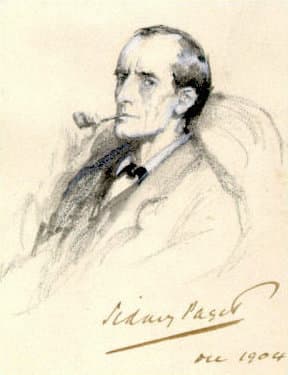
Sherlock Holmes
Arthur Conan Doyle

Hermione Granger
Harry Potter

Spock
Star Trek

Walter White
Breaking Bad
Public Figures Often Associated With Architect Traits
These individuals are popularly associated with high openness + high conscientiousness based on their public persona. Individual personalities are complex and may differ from public perception.

Bill Gates
Co-founder, Microsoft

Marie Curie
Physicist & Chemist

Isaac Newton
Physicist & Mathematician

Ada Lovelace
Mathematician & Writer
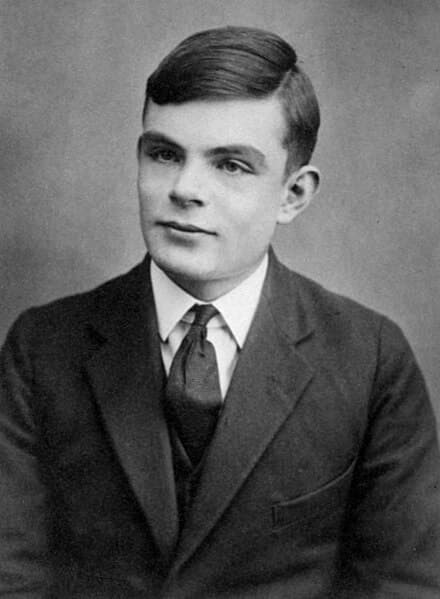
Alan Turing
Computer Scientist
Your quietness isn't coldness—it's focused concentration
When you critique ideas, you're trying to make them stronger, not tear them down
Your independence doesn't mean you don't care about the team
Related Personality Types
Based on peer-reviewed research
PRISM-7 is built on the HEXACO model of personality, which has been validated across multiple cultures and languages with superior reliability compared to older models.
Key citation: Ashton & Lee (2007). "The HEXACO Model of Personality Structure." Personality and Social Psychology Review.
Are You Architect?
Take our scientifically-validated personality assessment to discover your true type. Free results in ~8 minutes, go deeper anytime.
Discover Your Type