Being without support, guidance, or security; being targeted or abandoned.
To have security, guidance, and support.
To create certainty in an uncertain world, to test the intentions of others to ensure safety, to defend the group against threats, and to find an authority figure or belief system they can trust implicitly.
The internal world of the Six is a landscape of constant, low-level vigilance—a radar system that never fully powers down. Unlike types who move through the world assuming a baseline of safety, the Six operates on the subconscious premise that the world is inherently unpredictable and potentially hostile. This isn't necessarily a trembling fear; often, it manifests as a robust, intellectual skepticism or a dry, reactive wit. The core wound of the Six is a loss of faith in their own inner guidance system. Somewhere in their developmental history, they internalized the message that they did not have the capacity to handle life's challenges alone, leading to a lifelong strategy of seeking external support—alliances, authorities, belief systems—while simultaneously doubting those very sources.
The Six's relationship with time is heavily skewed toward the future, but a specific version of it: the 'what if.' This mental time travel is physically exhausting. It often results in a somatic tightness—shoulders raised, jaw clenched, eyes darting—as if the body is bracing for an impact that hasn't happened. This somatic tension is the physical manifestation of their 'scanning' mechanism. They are excellent at reading non-verbal cues, often picking up on hidden agendas or shifts in emotional atmosphere that others miss. However, their interpretation of these cues is often colored by projection, attributing their own internal feelings of aggression or fear to the people around them.
Levels of Health
At their healthiest, Sixes dismantle their defensive walls and access a profound sense of inner courage and self-reliance. The frantic scanning of the environment ceases, replaced by a grounded presence and a quiet alertness. They no longer look outside themselves for permission or security; they have internalized the 'good parent' and trust their own judgment.
In the average range, the Six is driven by a background hum of anxiety that they attempt to manage through external structures and alliances. They are dutiful, hardworking, and fiercely committed to their responsibilities, often believing that if they just follow the rules and work hard enough, they will be safe. However, they are plagued by ambivalence and indecision.
At the unhealthy level, the Six's anxiety spirals into paranoia and irrationality. The world appears entirely hostile and threatening, leading to a state of acute panic or hysterical reactivity. They feel persecuted and may lash out at perceived enemies to preemptively strike before they are struck.
Wings
The 6w5 integrates the Six's anxiety with the Five's withdrawal and intellectualization. This wing creates a personality that is more solitary, serious, and focused on systems than people. They manage their fear not by seeking a herd, but by hoarding knowledge and observing from the periphery.
The 6w7 brings the Seven's extraversion, optimism, and desire for distraction to the Six's anxiety. This combination creates a personality that is more sociable, ingratiating, and visibly energetic. They manage their fear through connection and activity—'if I keep moving and keep everyone liking me, I'll be safe.' They are often funny, charming, and engaging, using humor as a primary defense mechanism to disarm potential threats and diffuse tension.
Growth & Stress Paths
When the Six integrates toward Type Nine, the constant mental chatter quiets down, and they access a profound sense of bodily groundedness and peace. This is not a lazy checking-out, but a spiritual trusting-in. The Six stops gripping the steering wheel of life so tightly and realizes that the universe has a flow that can be trusted.
Under extreme stress, when their safety strategies fail, the Six disintegrates toward Type Three. They panic about their survival and standing, adopting a frenetic, image-conscious workaholism. The usual collaborative nature of the Six vanishes, replaced by a competitive drive to prove their worth and silence their critics.
Think You're a Type 6?
Enneagram typing can be subjective. Get a more objective, dimensional assessment with confidence intervals that show where you truly fall on each trait.
Take the Free PRISM-7 AssessmentIn romantic relationships, the Six is a complex mix of profound devotion and subtle testing. Their core fear of abandonment and betrayal drives much of their relational behavior. Initially, a Six may be guarded, scanning the potential partner for inconsistencies. They are looking for the catch. 'You seem too good to be true, so what are you hiding?' is a common internal monologue.
Risk Management Specialist
This role monetizes the Six's natural anxiety. A day in the life involves scanning operational data for vulnerabilities, creating disaster recovery protocols, and asking 'what if' so the company doesn't have to. The Six thrives here because their paranoia is a professional asset, not a liability, and they gain a sense of control by putting safeguards in place.
Investigative Journalist
Driven by a desire to uncover the truth and protect the public, the Six excels at digging beneath the surface. They are naturally suspicious of official narratives and persistent in following leads. The work satisfies their intellectual curiosity and their moral need to hold authority figures accountable, channeling their skepticism into a socially productive outlet.
Emergency Room Nurse / Paramedic
While it seems counterintuitive for an anxious type, Sixes are often calmest in the eye of the storm. The clear protocols, the team-based environment, and the immediate, tangible nature of the problems allow the Six to bypass their ruminating mind and act with courageous precision. They feel safest when the danger is external and visible, rather than internal and vague.
Strategic Planner / Project Manager
Sixes are the ultimate contingency planners. They naturally foresee bottlenecks and logistical hurdles that optimistic types miss. A typical day involves coordinating teams, checking details, and ensuring that Plan B, C, and D are ready. They derive immense satisfaction from bringing order to chaos and protecting the team from failure through rigorous preparation.
Academic Researcher / Professor
Especially for the 6w5, academia offers a structured hierarchy, a clear set of rules (tenure, citations), and the validation of authority through knowledge. They can channel their doubt into the scientific method, rigorously testing hypotheses. The university system provides the 'protective institution' the Six craves, while the research allows for intellectual autonomy.
Deep Dive: Type 6 Guides
Type 6 Learning Style
How this type learns best
Type 6 Career Guide
Best career paths and workplace advice
Type 6 Relationships
Love, dating, and connection
Type 6 Communication
How to communicate effectively
Type 6 Stress & Coping
Managing stress and building resilience
Type 6 Leadership
Leadership style and management
Type 6 Personal Growth
Development and self-improvement
Type 6 At Work
Workplace dynamics and team roles
Type 6 Compatibility
Type compatibility and pairings

Princess Diana

Tom Hanks

Ellen DeGeneres

George H.W. Bush

Jennifer Aniston
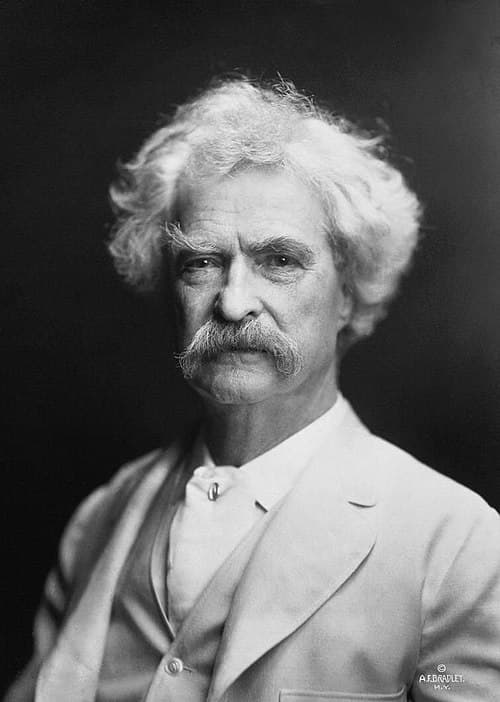
Mark Twain

Woody Allen

Ben Affleck

Julia Roberts

Jon Stewart

Spike Lee

J. Edgar Hoover

Mel Gibson

David Letterman

Richard Nixon

Malcolm X

Marilyn Monroe
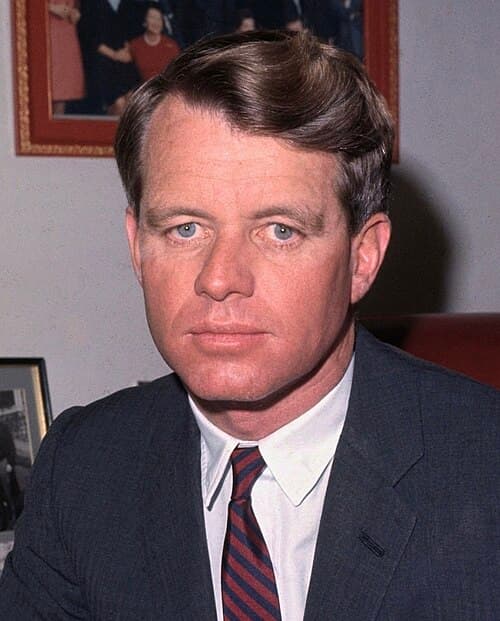
Robert F. Kennedy

Diane Keaton

Rush Limbaugh
In the PRISM-7 (HEXACO+) framework, the Enneagram Type 6 profile presents a unique signature that traditional MBTI fails to capture. The primary correlation is with Emotional Resilience (the inverse of Emotionality in HEXACO). Sixes typically score lower here, not because they are weak, but because their baseline arousal to potential threats is higher—they feel the 'fear' signals more acutely than other types. This is coupled with high Conscientiousness, specifically in the facets of Prudence and Diligence; their anxiety drives a need for order, planning, and thoroughness.
However, the crucial dimension PRISM-7 adds is Honesty-Humility. Sixes often score high on the 'Fairness' and 'Modesty' facets of this dimension, driven by their egalitarian worldview and dislike of arrogant posturing (unlike the potential narcissism of a Type 3 or 8). They value authentic, unpretentious connection. Additionally, their Adaptability score is often a paradox: they are intellectually agile (high Openness to solving problems) but emotionally resistant to unexpected change (low Adaptability to uncertainty). While MBTI might struggle to categorize a Six who is both a rigid planner (Judging) and a procrastinator (Perceiving), PRISM-7 explains this through the interplay of High Conscientiousness (desire for plan) vs. Low Emotional Resilience (fear of executing the wrong plan).
You may find strong alignment with these PRISM-7 archetypes:
While the Enneagram offers valuable frameworks for self-reflection and growth, the scientific community has identified significant limitations:
Limited Validation
Unlike the Big Five or HEXACO, the Enneagram has limited peer-reviewed empirical validation in academic psychology.
Subjective Typing
Determining your type often relies on self-reflection rather than objective measurement, leading to inconsistent results.
No Confidence Intervals
Results are presented as definitive types without acknowledging measurement uncertainty or borderline cases.
The PRISM-7 Difference
- Objective measurement — standardized questions with validated scoring
- Dimensional scores — see exactly where you fall on each trait
- Confidence intervals — know the precision of your results
- Based on HEXACO+ — the most validated model in modern psychology
Ready for Objective Personality Insights?
Discover your true personality profile with PRISM-7—the scientifically-validated evolution of personality assessment. Free, no signup required.
Take the Free PRISM-7 Assessment