Being useless, helpless, or incapable
To be capable and competent
To possess knowledge, to understand the environment, to have everything figured out
The Enneagram Type Five is defined by a fundamental scarcity mindset regarding energy and emotional resources. Unlike types that seek to expand their influence or connection, the Five operates on a premise of conservation. They unconsciously view the world as intrusive and demanding, a landscape where social obligations and emotional outbursts threaten to drain their limited internal battery. Consequently, they retreat into the fortress of the mind, believing that if they can just understand how the world works—mastering its mechanics, its logic, and its underlying patterns—they can defend themselves against being overwhelmed by it. This is not merely intellectual curiosity; it is a survival strategy. Knowledge becomes the proxy for safety, and competence becomes the shield against the terror of helplessness.
This retreat into the 'Head Center' creates a distinct disconnect from the body and the heart. Fives often experience themselves as a brain carried around by a vehicle, viewing their physical needs and emotional impulses as distracting static that interferes with the clarity of their thoughts. In everyday moments, this manifests as a subtle shrinking away; when a colleague asks a personal question, the Five might physically recoil or deflect with data, treating the inquiry as a breach of their perimeter. They are the masters of compartmentalization, keeping different spheres of their lives—work, hobbies, family—rigidly separate to prevent the messiness of one from contaminating the order of another. This fragmentation allows them to maintain control, but it comes at the cost of holistic integration.
The childhood origin of this pattern often stems from an early experience of intrusion or neglect that taught the Five that their needs were either 'too much' for their caregivers or simply would not be met. Some Fives describe intrusive parents who respected no boundaries; others describe a vacuum where they were left entirely to their own devices. In either case, the child concluded that the safest path was to minimize their needs to near-zero. The internal logic is stark: 'If I do not ask for anything, I am beholden to no one. If I need nothing, I cannot be hurt by deprivation.' This creates the Five's characteristic 'avarice'—not necessarily a greed for money, but a hoarding of time, privacy, and selfhood. They hold back their presence, fearing that if they give an inch, the world will take a mile.
Levels of Health
At their healthiest, Fives transcend the role of the detached observer to become visionary pioneers. The walls of their mental fortress come down, allowing their immense intellectual capacity to interface directly with the world. No longer hoarding knowledge, they become generous conduits of wisdom, excited to share their discoveries without the fear of being depleted.
In the average range, the Five’s fear of intrusion begins to dictate their behavior. They become the classic 'ivory tower' intellectual or the basement tinkerer, prioritizing their internal constructs over external reality. They begin to aggressively manage their time and energy, treating social interactions as transactions that must be minimized.
At the unhealthy level, the Five's detachment severs their tether to reality. The fear of helplessness morphs into a dark nihilism or paranoid delusion. Feeling completely unable to cope with the demands of the environment, they retreat into a schizoid isolation, cutting off all social contact.
Wings
The 5w4 brings the emotional depth and aesthetic sensitivity of the Four into the analytical framework of the Five. This is the 'Philosopher' or the 'Bohemian Scientist.' Where a core Five seeks knowledge for safety, the 5w4 seeks knowledge to understand the sublime, the tragic, or the beautiful. They are far more guided by their moods and intuition than the 5w6.
The 5w6 integrates the loyalty, anxiety, and systems-thinking of the Six. This is the 'Engineer' or the 'Technical Specialist.' Unlike the abstract 5w4, the 5w6 is grounded in the practical application of knowledge. They are far more interested in how things work in the real world—mechanics, coding, logistics, biology.
Growth & Stress Paths
When a Five integrates toward Type Eight, the transformation is powerful and visceral. The 'brain in a jar' suddenly grows a body. They move from thinking to doing, from observing to impacting.
Under significant stress, the Five disintegrates toward Type Seven. The usually focused and deep investigator becomes scattered, manic, and escapist. When the pressure of their internal world becomes too great, or when their feelings of emptiness threaten to consume them, they 'change the channel' to Seven-like distraction.
Think You're a Type 5?
Enneagram typing can be subjective. Get a more objective, dimensional assessment with confidence intervals that show where you truly fall on each trait.
Take the Free PRISM-7 AssessmentPossess a rare ability to remain objective and emotionally detached during crises, acting as the 'eye of the storm' when others panic.
Demonstrate unparalleled persistence in mastering complex systems, often becoming the singular expert in niche fields that others find too daunting.
Exhibit profound respect for boundaries and autonomy, never intruding on others' privacy or manipulating social dynamics for gain.
Capable of visionary, non-linear innovation, connecting disparate facts to form theories that fundamentally shift paradigms.
Maintain a high degree of self-sufficiency, requiring very little external validation or maintenance to sustain their work and well-being.
Struggle with 'avarice' of time and energy, unconsciously treating loved ones as thieves stealing their limited resources.
Tendency to intellectualize emotions, analyzing their grief or love as a biological phenomenon rather than actually feeling the sensation.
Prone to severe isolation, rationalizing their withdrawal as independence until they have severed necessary lifelines to the community.
Difficulty initiating action, often waiting for 'perfect' knowledge before moving, leading to missed opportunities and stagnation.
Can appear arrogant or condescending, dismissing those who do not communicate with logical precision or emotional restraint.
In romantic and close relationships, the Five presents a unique paradox: they are often the most low-maintenance partners, yet the hardest to truly know. Their core fear of engulfment means they approach intimacy with a hand on the escape hatch, needing to know they can retreat to their sanctuary at a moment's notice. Core relationship patterns often revolve around the 'demand-withdraw' cycle. If a partner pushes for more emotional expression or time (perceived as a 'demand'), the Five instinctively pulls back (to 'conserve'), which makes the partner chase harder, causing the Five to build thicker walls.
Specialized Researcher
This role perfectly aligns with the Five's drive to drill down into a specific subject until they hit bedrock. Whether in biotech, history, or market analysis, the role rewards deep focus and isolation. A typical day involves hours of uninterrupted reading, data synthesis, and the thrill of connecting two obscure facts that no one else has noticed, all within the safety of a quiet office or lab.
Senior Software Architect
Beyond just coding, architecture requires holding a massive, complex system in one's mind—a playground for the Five's intellect. The job allows them to build 'logical castles' where every variable is controlled. They can work asynchronously, communicate via ticket systems (avoiding emotional drainage), and are valued for the elegance of their logic rather than their social charisma.
University Professor (Tenured)
Academia offers the 'Ivory Tower' quite literally. It provides a protected environment where the pursuit of knowledge is the primary currency. The Five can spend years on a single monograph. While teaching requires energy, the lecture format allows them to share knowledge from a position of authority and control, rather than through unpredictable social dialogue.
Forensic Analyst / Data Scientist
These roles involve extracting truth from chaos using pure logic. The data does not lie, and it does not have feelings. A Five thrives here because they can detach from the gruesome or messy reality of a crime or business failure to focus entirely on the patterns in the numbers, providing objective insights that emotional types might miss.
Technical Writer / Documentation Lead
This role bridges the gap between complex systems and human understanding. Fives are excellent at translating dense, technical jargon into clear, structured manuals. It allows them to learn everything about a product (satisfying curiosity) and explain it without having to engage in direct customer service or sales.
Deep Dive: Type 5 Guides
Type 5 Learning Style
How this type learns best
Type 5 Career Guide
Best career paths and workplace advice
Type 5 Relationships
Love, dating, and connection
Type 5 Communication
How to communicate effectively
Type 5 Stress & Coping
Managing stress and building resilience
Type 5 Leadership
Leadership style and management
Type 5 Personal Growth
Development and self-improvement
Type 5 At Work
Workplace dynamics and team roles
Type 5 Compatibility
Type compatibility and pairings
Institute a '5-minute rule' for sharing. Commit to revealing one personal feeling (not a thought) to a trusted person daily. It trains the muscle of vulnerability without overwhelming your system.
Recognize 'hoarding' triggers. When you feel the urge to decline an invitation or stay silent to 'save energy,' challenge it. Often, engagement generates energy rather than depleting it.
Move from preparation to practice. If you are researching a hobby, set a hard deadline to actually do it. Accept that doing it imperfectly is better than understanding it perfectly but never experiencing it.
Validate the emotions of others even if they seem illogical. You don't have to agree with the logic to acknowledge the reality of their pain. This builds the bridges you often unknowingly burn.

Albert Einstein

Bill Gates
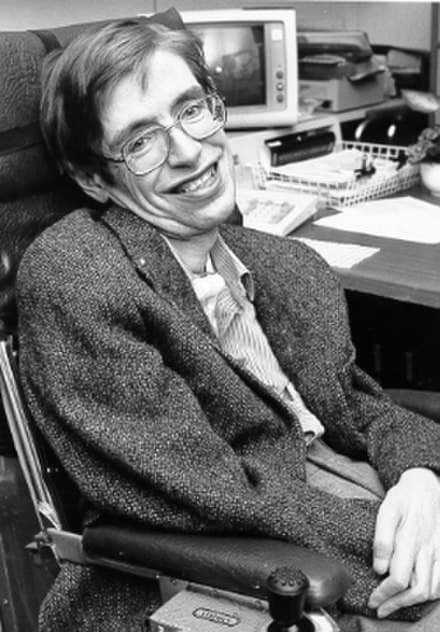
Stephen Hawking

Jane Goodall

Mark Zuckerberg

Emily Dickinson

Jodie Foster

Tim Burton
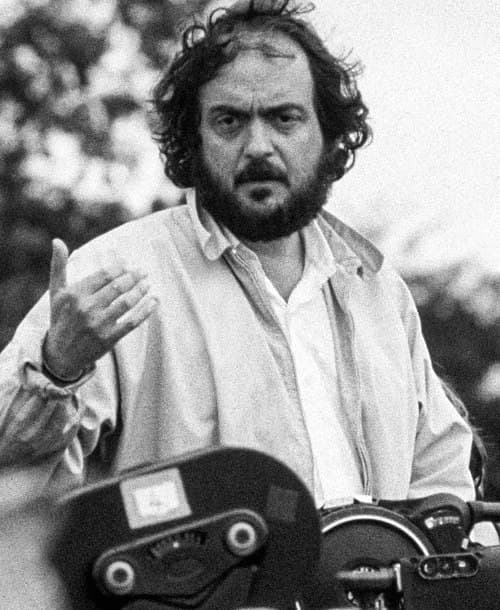
Stanley Kubrick

Isaac Newton

Sigourney Weaver

Oliver Sacks

Bobby Fischer

Gary Larson
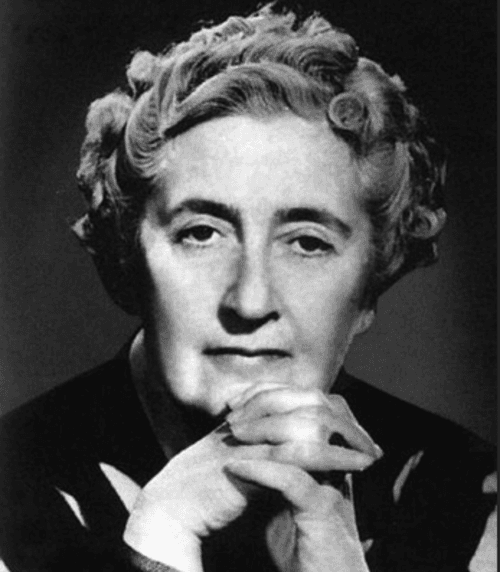
Agatha Christie

Jesse Eisenberg

David Byrne

Ursula K. Le Guin

Tilda Swinton

Anthony Fauci
The Type Five profile is a quintessential example of how PRISM-7's nuance outperforms the binary nature of MBTI or the broad strokes of Big Five.
-
High Openness (Intellectual Curiosity): This is the defining engine of the Five. PRISM-7 captures the specific facet of 'Inquisitiveness' and 'Unconventionality'—the drive to deconstruct systems—rather than just general artistic appreciation.
-
Low Extraversion (Social Boldness/Liveliness): Unlike MBTI's 'Introversion' which just means 'recharges alone,' PRISM-7 identifies the specific withdrawal from social energy. However, Fives often have high Assertiveness when defending their ideas, a nuance lost in simple 'Introvert' labels.
-
Variable Emotional Resilience: Here is where PRISM-7 shines. A Five might score low on 'Anxiety' (appearing stoic and detached) but also low on 'Sentimentality'. A standard Big Five test might label them 'Stable' due to lack of outbursts, but PRISM-7 detects the defensive nature of their stability—it is resilience built on detachment, not necessarily regulation.
-
Honesty-Humility: Fives typically score high on the 'Sincerity' and 'Fairness' facets of this HEXACO dimension. They are rarely manipulative (which requires too much energy) and value objective truth over social maneuvering. This explains their bluntness and distaste for office politics better than 'Low Agreeableness' would.
While the Enneagram offers valuable frameworks for self-reflection and growth, the scientific community has identified significant limitations:
Limited Validation
Unlike the Big Five or HEXACO, the Enneagram has limited peer-reviewed empirical validation in academic psychology.
Subjective Typing
Determining your type often relies on self-reflection rather than objective measurement, leading to inconsistent results.
No Confidence Intervals
Results are presented as definitive types without acknowledging measurement uncertainty or borderline cases.
The PRISM-7 Difference
- Objective measurement — standardized questions with validated scoring
- Dimensional scores — see exactly where you fall on each trait
- Confidence intervals — know the precision of your results
- Based on HEXACO+ — the most validated model in modern psychology
Ready for Objective Personality Insights?
Discover your true personality profile with PRISM-7—the scientifically-validated evolution of personality assessment. Free, no signup required.
Take the Free PRISM-7 Assessment