Being deprived, trapped in emotional pain, or limited by boredom
To be satisfied, content, and fully alive in every moment
To maintain a high level of excitement, to keep their options open, to avoid the abyss of negative emotion, and to mentally inhabit a future that is always better than the present.
At the heart of Type Seven lies a profound and often misunderstood relationship with the concept of 'Gluttony.' In the Enneagram tradition, this does not refer merely to physical consumption, but to a voraciousness of the mind—a desperate, unyielding hunger for stimulation, novelty, and positive options. Sevens are not simply 'fun-loving' in a superficial sense; they are existential fugitives, running a high-speed race against the encroaching shadow of internal emptiness or pain. Their cognitive machinery is constantly revving, scanning the horizon for the next potential source of joy, ensuring that they never have to sit still long enough for the silence to become deafening. This creates a personality that is dazzlingly quick, seemingly optimistic, and perpetually in motion, but driven by a subtle, underlying anxiety about being trapped in a mundane or painful reality.
The core wound of the Seven often stems from an early childhood experience of sudden deprivation or a premature loss of the 'paradise' of infancy. Whether through a literal traumatic event or a subjective perception of the mother figure withdrawing nurturing, the young Seven unconsciously decided that they could not rely on the outside world or others to provide emotional sustenance. The resulting psychic strategy was to 'nurture self' through the imagination. If reality is disappointing, the Seven learns to retreat into a mental playground where they can conjure up unlimited exciting scenarios. They become the architects of their own satisfaction, believing that if they can just plan enough, know enough, and experience enough, they will never have to feel that primal lack again.
The internal logic of the Seven is built on 'Rationalization,' their primary defense mechanism. Sevens are masters of reframing reality to avoid negative feedback or guilt. If they drop a project halfway through, they don't see it as a failure of discipline; they reframe it as 'pivoting to a better opportunity' or 'having learned all I needed to learn.' This cognitive sleight-of-hand protects them from the superego's criticism and allows them to maintain their self-image as joyful and successful. However, this also creates a dangerous blind spot where they systematically edit out the consequences of their impulsivity, leaving a trail of unfinished business and disappointed relationships that they refuse to acknowledge.
In the Head Center (Thinking Center), Sevens use their intellect not to analyze depth, but to catalogue breadth. They are intellectual hummingbirds, cross-pollinating ideas from disparate fields. This makes them incredibly innovative and quick-witted. They can see connections that others miss because their minds are unencumbered by the rigid categories that bind other types. However, this mental agility often serves as a barrier to true understanding. To deeply understand something requires staying with it, enduring the frustration of the learning curve, and facing the possibility of incompetence—all things the Seven avoids. Thus, they often become 'jacks of all trades, masters of none,' possessing a dazzling conversational knowledge but lacking the grounded expertise that comes from sustained struggle.
Developmentally, the Seven's trajectory involves a confrontation with the 'Dark Night of the Soul.' Eventually, the strategy of running out of options fails. The distractions stop working; the reframing collapses. It is in this space of disillusionment that the Seven has their greatest opportunity. If they can stop running and simply be with the emptiness they have spent a lifetime avoiding, they discover that the void is not a black hole, but a fertile ground. They learn that joy does not come from the external acquisition of experiences, but from a quiet, internal gratitude for what is already present. This shift from 'seeking' to 'savoring' marks the transition from the frantic enthusiast to the ecstatic sage.
Ultimately, the spiritual journey of the Seven is about 'Holy Work' or 'Holy Plan'—the realization that they do not need to manually manufacture their own happiness. It is a surrender of the ego's frantic planning to a larger, unfolding flow of life. When a Seven integrates, they bring their incredible capacity for joy, synthesis, and vision into the present moment. They become capable of true commitment, deep mastery, and a sober, grounded optimism that is resilient because it has been tested by pain, not because it has avoided it. They become the true visionaries of the Enneagram, showing us all that the present moment, when fully inhabited, contains more wonder than any imagined future.
Levels of Health
At this level of integration, the Seven has moved from frenetic consumption to profound appreciation. They have slowed down their internal metabolic rate, allowing them to fully digest their experiences rather than simply tasting and discarding them. No longer driven by the Fear of Missing Out (FOMO), the healthy Seven possesses a quiet, unshakable joy that is independent of external circumstances.
The average Seven is the classic 'Hyperactive Consumer.' At this stage, the fear of boredom begins to drive the bus. They are perceptibly scattered, often checking their phones during conversations, planning the next weekend while currently on vacation, and interrupting others to finish their sentences. Their storytelling becomes exaggerated as they unconsciously try to spice up reality to make it more palatable.
In the unhealthy range, the Seven's flight from pain becomes a manic panic. The gap between their grandiose expectations and reality widens, causing immense frustration. They become impulsive, erratic, and potentially reckless, engaging in high-risk behaviors (gambling, substance abuse, dangerous driving) to feel something other than the encroaching depression.
Wings
The 7w6 brings the anxiety and relational orientation of the Six into the Seven's expansive world. This wing creates a personality that is more visibly anxious, endearing, and dependent on feedback from others. Unlike the more independent 7w8, the 7w6 seeks safety in numbers; they want to have their adventures with a 'crew.' They are often the comedians of the Enneagram, using self-deprecating humor and wit to disarm potential threats and endear themselves to the group.
The 7w8 combines the visionary drive of the Seven with the somatic dominance and aggression of the Eight. This is a much earthier, tougher, and more practical character. They are less concerned with being liked and more concerned with getting what they want.
Growth & Stress Paths
When the Seven moves toward Five in growth (integration), the frantic scattering of energy consolidates into a laser-like beam of focus. The Seven, usually terrified of digging deep for fear of getting stuck, discovers the profound satisfaction of mastery. They stop hoarding experiences and start understanding mechanisms.
Under significant stress, the Seven disintegrates to Type One. The usual flexibility and sunny optimism vanish, replaced by a rigid, critical, and perfectionistic edge. Feeling that their loose, improvisational style is failing to keep chaos at bay, they overcorrect into strict authoritarianism.
Think You're a Type 7?
Enneagram typing can be subjective. Get a more objective, dimensional assessment with confidence intervals that show where you truly fall on each trait.
Take the Free PRISM-7 AssessmentIn romantic relationships, the Seven is a 'Fantasist.' They begin relationships with a burst of idealization, projecting a cinematic quality onto the partner. They are generous, exciting, and eager to share their world of adventures. Dates with Sevens are never boring—they are curated experiences designed to elicit maximum joy. However, the core fear of deprivation creates a 'Bait and Switch' dynamic.
Serial Entrepreneur / Founder
Travel Journalist / Vlogger
Monetizes their core desire for novelty. This role legitimizes their need to constantly move and explore. The deadline pressure forces the 'finishing' discipline they lack naturally. Day in the Life: Waking up in a new city, hunting for hidden gems, quickly synthesizing cultural experiences into engaging content, and rushing to the airport for the next leg.
Experience Designer / Event Producer
Allows the Seven to construct the 'perfect moments' they crave. It leverages their aesthetic sensitivity (Openness) and logistical improvisation. Day in the Life: Juggling ten different vendors, solving a sudden venue crisis with a creative workaround, and watching the crowd's delight at the sensory immersive environment they built.
Trend Forecaster / Futurist
Sevens live in the future; this job pays them to stay there. Their pattern-matching ability allows them to spot emerging cultural waves before others. Day in the Life: Scanning diverse media sources, connecting a shift in Tokyo fashion to a tech trend in Silicon Valley, and presenting a 'State of the World 2030' deck to corporate boards.
Crisis Communications Manager
Counter-intuitive but effective. Sevens thrive in high-energy chaos where normal rules don't apply. Their ability to reframe narratives (Rationalization) is a superpower here. Day in the Life: The phone rings at 2 AM with a PR disaster. The Seven wakes up instantly alert, spinning the negative story into a redemption arc and managing multiple media outlets simultaneously.
Deep Dive: Type 7 Guides
Type 7 Learning Style
How this type learns best
Type 7 Career Guide
Best career paths and workplace advice
Type 7 Relationships
Love, dating, and connection
Type 7 Communication
How to communicate effectively
Type 7 Stress & Coping
Managing stress and building resilience
Type 7 Leadership
Leadership style and management
Type 7 Personal Growth
Development and self-improvement
Type 7 At Work
Workplace dynamics and team roles
Type 7 Compatibility
Type compatibility and pairings

Robin Williams

Richard Branson

Elton John

Jim Carrey

Steven Spielberg

Miley Cyrus

Russell Brand

Brad Pitt

Cameron Diaz

Jack Black

Mozart

Bette Midler

Eddie Murphy

John F. Kennedy

Sarah Silverman

Katy Perry

Howard Stern

Benjamin Franklin

Conan O'Brien
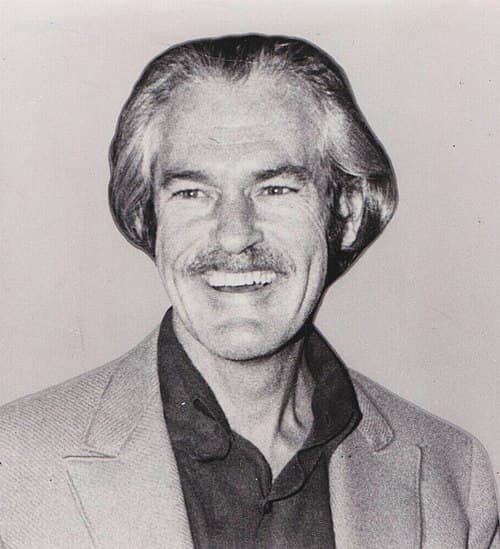
Timothy Leary
In the PRISM-7 framework, the Enneagram Seven is the archetypal representation of High Openness paired with High Extraversion and Low Conscientiousness.
While the Enneagram focuses on the motivation (fear of pain), PRISM-7 clarifies the mechanism. The Seven's 'Gluttony' is biologically rooted in a high sensitivity to reward signals (Dopamine) and a high need for cognitive complexity (Openness).
Crucially, HEXACO+ adds the Honesty-Humility dimension. Average Sevens often score lower here, not because they are malicious, but because they feel 'entitled' to bypass rules or commitments that aren't 'fun,' viewing their needs as exceptions.
Furthermore, PRISM-7's Emotional Resilience dimension reveals a nuance: Sevens often appear to have high resilience because they smile through adversity, but this is often a 'false high'—a coping strategy rather than true stability. A true PRISM-7 assessment would distinguish between a Seven who is genuinely Resilient (can process stress) vs. one who is just Avoidant (High Adaptability but low tolerance for negative affect).
While the Enneagram offers valuable frameworks for self-reflection and growth, the scientific community has identified significant limitations:
Limited Validation
Unlike the Big Five or HEXACO, the Enneagram has limited peer-reviewed empirical validation in academic psychology.
Subjective Typing
Determining your type often relies on self-reflection rather than objective measurement, leading to inconsistent results.
No Confidence Intervals
Results are presented as definitive types without acknowledging measurement uncertainty or borderline cases.
The PRISM-7 Difference
- Objective measurement — standardized questions with validated scoring
- Dimensional scores — see exactly where you fall on each trait
- Confidence intervals — know the precision of your results
- Based on HEXACO+ — the most validated model in modern psychology
Ready for Objective Personality Insights?
Discover your true personality profile with PRISM-7—the scientifically-validated evolution of personality assessment. Free, no signup required.
Take the Free PRISM-7 Assessment