To inhabit the mind of an INTJ is to live inside a perpetual simulation engine. While others are reacting to the immediate sensory world—the weather, the noise, the small talk—the INTJ is unconsciously running probability algorithms about the future. Their internal experience is less a stream of consciousness and more a complex, three-dimensional schematic of how systems interact, evolve, and eventually decay. This cognitive detachment often creates a sensation of being a 'ghost in the machine,' observing human affairs from a slight remove, analyzing the structural integrity of social norms, institutions, and accepted truths. They do not merely want to understand the world; they feel a compulsive, almost biological need to optimize it.
This psychological orientation often manifests early in childhood, leading to the 'Little Professor' phenomenon. Young INTJs frequently feel like aliens dropped into a chaotic, irrational nursery. While peers are engaged in rough-and-tumble play, the INTJ child is often found in the corner, dismantling a toy to understand its mechanics or reading encyclopedias to grasp the taxonomy of dinosaurs. This early separation can forge a deep-seated self-reliance. They learn quickly that their validation comes not from social conformity, but from competence and the accuracy of their insights. Consequently, many INTJs grow up with a paradoxical self-image: they feel intellectually superior yet socially awkward, confident in their ideas but often insecure about their ability to communicate them effectively to a world that prioritizes emotional resonance over logical structuralism.
The central tension of the INTJ personality lies between their Dominant Introverted Intuition (Ni)—which is fluid, abstract, and dreamlike—and their Auxiliary Extraverted Thinking (Te)—which is rigid, empirical, and decisive. They are dreamers with spreadsheets. This combination creates a relentless drive to manifest the abstract into the concrete. Unlike the INTP, who may be content exploring a theory for its own sake, the INTJ considers an idea useless if it cannot be applied. They possess a 'ruthless pragmatism' that can be unsettling to others. If a tradition, a protocol, or even a relationship is deemed inefficient or obstructive to the overarching vision, the INTJ is prepared to excise it with surgical precision. This is not born of malice, but of a high-fidelity commitment to what they perceive as the objective truth or the 'best path' forward.
However, the stereotype of the INTJ as a cold, robotic logic-machine is a profound misunderstanding of their internal landscape. Deep within their stack lies Introverted Feeling (Fi), which acts as a highly pressurized core of moral values and intense emotions. INTJs feel deeply, but they process these feelings privately, filtering them through a mesh of rationality before they ever reach the surface. When an INTJ cries or shows rage, it is often a tectonic event, signaling that a core value has been violated. Their 'coldness' is actually a form of emotional conservation; they view emotional energy as a limited resource to be invested only in people and causes that have passed their rigorous vetting process.
Cognitive Function Stack
Ni is the INTJ's 'background processor,' a cognitive function that operates largely outside of conscious control to synthesize vast amounts of data into singular insights. Unlike other types who think in linear steps (A to B to C), the INTJ mind leaps from A to Z instantly, often without knowing how they got there. In daily life, this manifests as 'knowing' things they shouldn't realistically know—predicting a business failure months in advance or sensing a betrayal before it happens.
If Ni is the architect drafting the blueprints, Te is the construction foreman yelling orders to get it built. Te is responsible for the INTJ's signature decisiveness and organizational prowess. It is the function that creates checklists, standard operating procedures, and hierarchies.
Often the most underestimated aspect of the INTJ, Fi provides the fuel for their ambition. While Te determines how to do things, Fi determines why. This function creates a private, internal framework of morals and tastes that is largely immune to external social pressure.
Se represents the INTJ's relationship with the immediate physical world, and as the inferior function, it is a source of both stress and aspiration. Under normal conditions, INTJs may ignore their physical surroundings, forgetting to eat, bumping into furniture, or struggling to be 'present' in the moment because their mind is in the future. However, under extreme stress, the 'Se Grip' takes over.
Introverted Intuition
Extraverted Thinking
Introverted Feeling
Extraverted Sensing
INTJ cognitive function stack (strongest → weakest)
Systems Thinking & Architecture
INTJs possess a unique cognitive ability to visualize complex systems as a whole, identifying bottlenecks and leverage points that are invisible to others. In a workplace, while others are focused on putting out daily fires, the INTJ is analyzing why the fires are starting in the first place and redesigning the fire-suppression system. This goes beyond simple planning; it is 'architectural' thinking. They can hold conflicting variables in their mind simultaneously—budget constraints, personnel capabilities, market trends—and synthesize a solution that satisfies all parameters. This strength allows them to build scalable organizations and robust software architectures, as they naturally anticipate second and third-order consequences of any decision.
Intellectual Independence
The INTJ is naturally immunized against groupthink. Their self-worth is tied to their own logical analysis rather than social consensus. If 99 people say the sky is green, the INTJ will look up, check the spectrum analysis, and state firmly that it is blue, regardless of the social cost. This makes them invaluable in crises or innovative endeavors where 'the way we've always done it' is the path to failure. They are the whistleblowers, the disruptors, and the reformers. This strength is rooted in their Te-Fi axis: Te demands empirical evidence, while Fi refuses to compromise personal integrity for the sake of harmony. They simply do not care about being 'liked' as much as they care about being 'right' in the objective sense.
Operational Determination
INTJ determination is distinct from mere stubbornness; it is an optimized pursuit of a goal. Once an INTJ has decided a vision is viable (Ni) and constructed a plan (Te), they become a force of nature. They view obstacles not as reasons to stop, but as engineering problems to be solved. They will learn entirely new skill sets over a weekend if that's what is required to move the project forward. This is the 'autodidact' strength—they can teach themselves almost anything. Their energy is efficient; they don't waste effort on drama or complaining, preferring to channel every ounce of focus into execution. This makes them terrifyingly effective competitors who often win simply because they have calculated the most efficient path to victory.
Strategic Optimization
INTJs have a compulsive need to improve everything they touch. They walk into a room, a relationship, or a company and immediately spot the inefficiencies. 'Good enough' is anathema to the INTJ. This drive for continuous improvement means they are always refining their methodologies, seeking tools to automate mundane tasks, and eliminating redundancies. In a team setting, this elevates the performance of everyone around them. They are the ones who create the shared drive structure that saves the team 10 hours a week, or who rewrite the script to cut out 20 minutes of wasted meeting time. Their standard is perfection, and while they may never reach it, their attempt to get there results in excellence.
The Efficiency Trap in Relationships
INTJs often attempt to apply the same logic to human relationships that they apply to inanimate systems, leading to disastrous results. They may try to 'fix' a partner's emotional distress with practical solutions rather than offering empathy, viewing tears as a problem to be solved rather than an experience to be shared. This can make them appear dismissive or arrogant. They might bypass social rituals (like saying 'good morning' or making small talk) because they view them as inefficient, failing to realize that these 'inefficiencies' are the glue of social trust. The blindspot is failing to recognize that in human dynamics, emotional resonance is the most efficient path to cooperation.
Analysis Paralysis & Perfectionism
Because their Ni can foresee so many potential failure points, INTJs can become trapped in a state of inaction, refusing to launch a project until every variable is accounted for. They may spend weeks researching the 'perfect' camera to buy, only to never buy one at all. In professional settings, this manifests as over-scoping or gold-plating a product. They struggle to accept the 'Minimum Viable Product' concept because releasing something imperfect feels like a violation of their competence. This perfectionism can lead to burnout, as they hold themselves to impossible standards that no reality can match, leading to a cycle of procrastination and self-criticism.
Arrogance & IntellectualDismissiveness
INTJs often struggle to respect authority or peers who they deem intellectually inferior. They can be visibly impatient with those who process information slower or who prioritize emotional data. This often manifests as cutting people off in sentences, rolling eyes, or using a condescending tone. The danger here is that they dismiss valid perspectives simply because the person delivering them isn't 'logical' enough. They may miss crucial political or social nuances because they are too busy critiquing the logic of the speaker. This can create enemies in the workplace who, while perhaps not as 'smart' as the INTJ, hold the social capital necessary to derail the INTJ's projects.
Sensory Neglect (The Body Dissociation)
Living almost entirely in their heads, INTJs treat their bodies like annoying vehicles that require maintenance. They may ignore chronic pain, skip meals because they are 'in the flow,' or sit in ergonomically disastrous positions for hours. This dissociation from the physical self means they are often the last to know they are sick or stressed. By the time an INTJ acknowledges they are tired, they are usually on the brink of exhaustion. This blindspot extends to their environment; they might live in a stark, undecorated space or wear the same functional clothing daily, missing out on the aesthetic and sensory joys that ground other types in the richness of the present moment.
Think You're an INTJ?
MBTI categories can be misleading. Get a more accurate, dimensional assessment with confidence intervals that show where you truly fall on each trait.
Take the Free PRISM-7 AssessmentINTJ in Relationships
Romance for an INTJ is a serious investment. They do not 'date around' for the fun of it; they are interviewing candidates for a life partnership. The dating phase is often a rigorous screening process where they test for intellectual compatibility, long-term goals, and core values.
The INTJ social circle is deliberately microscopic. They prioritize depth over breadth, often maintaining only two or three mere acquaintances and perhaps one 'true' friend. They view small talk as a painful waste of cognitive resources.
In the professional realm, the INTJ is the 'high-competence, low-politics' worker. They thrive in meritocracies and wither in bureaucracies. They prefer to work alone or in small, elite teams where everyone pulls their weight.
Deep Dive: INTJ Guides
INTJ Learning Style
How this type learns best
INTJ Career Guide
Best career paths and workplace advice
INTJ Relationships
Love, dating, and connection
INTJ Communication
How to communicate effectively
INTJ Stress & Coping
Managing stress and building resilience
INTJ Leadership
Leadership style and management
INTJ Personal Growth
Development and self-improvement
INTJ At Work
Workplace dynamics and team roles
INTJ Compatibility
Type compatibility and pairings
Software Architect / Lead Engineer
This role is the quintessential playground for the INTJ mind. It requires pure logic, structural planning, and the ability to foresee how code written today will scale five years from now. It offers the autonomy to build 'perfect' systems and creates a barrier between the INTJ and direct customer service. The feedback loop is immediate and objective—the code compiles or it doesn't—which satisfies their Te need for empirical results.
Strategic Consultant / Corporate Fixer
INTJs excel at walking into chaotic environments, diagnosing the root cause of dysfunction, and designing brutal but effective restructuring plans. This career leverages their ability to detach emotionally from the 'way things are' to see 'how things should be.' The project-based nature of consulting appeals to their need for new intellectual challenges, preventing the boredom of routine maintenance.
Investment Fund Manager / Quant
Financial markets are complex, pattern-based systems that reward cool-headed prediction over emotional reactivity—perfect for the Ni-Te loop. INTJs enjoy the high-stakes game of outsmarting the market through superior analysis. This field rewards their independent thinking and ability to ignore herd mentality (e.g., selling when everyone is buying because the data suggests a crash).
Scientific Researcher (Theoretical)
Whether in physics, neuroscience, or AI, research allows the INTJ to push the boundaries of human knowledge. It provides the deep solitude they crave and the opportunity to focus intensely on a single, complex problem for years. The academic rigor aligns with their high standards, though they may chafe at the grant-writing and political aspects of academia.
Surgeon or Specialist Physician
While some medical fields require too much bedside manner for the average INTJ, surgery or pathology offers a focus on technical precision and problem-solving. The diagnostic process is pure deductive reasoning. The high pressure and requirement for mastery appeal to their desire for competence, and the clear hierarchy of the operating room provides a structured environment they understand.
Develop the 'Five-Second Pause.' When someone brings you a problem, force yourself to wait five seconds before offering a solution. Use that time to ask yourself: 'Are they asking for a fix, or are they asking for empathy?' If you aren't sure, ask them. This simple delay can save your relationships from your 'fix-it' reflex.
Consciously engage your Se (Sensing) function. Schedule 'dumb' time where you are not allowed to be productive. Go for a hike and force yourself to name five colors you see. Cook a complex meal and focus on the smells. Getting out of your head and into your body is the only way to prevent the burnout that comes from constant cognitive simulation.
Practice 'Intellectual Humility.' You are likely the smartest person in the room, but that doesn't mean you are right about everything. Intelligence is not wisdom. Actively seek out perspectives from Feeling types to understand the human variables you are naturally blind to. Acknowledge that social cohesion is a metric of success, not just a byproduct.
Translate your vision into bite-sized steps. Your ability to see the endgame is a gift, but it overwhelms others. Learn to break down your 5-year plan into a 'next week' plan that your team can digest. You must act as the bridge between the abstract future and the concrete present, or you will be a leader with no followers.
Accept the 'Good Enough' standard for non-critical tasks. Apply the Pareto Principle (80/20 rule) to your perfectionism. If the laundry isn't folded perfectly, the world will not end. Save your high standards for your life's work and let the small stuff be messy. This preserves your limited energy for what truly matters.

Elon Musk

Isaac Newton

Nikola Tesla

Michelle Obama

Arnold Schwarzenegger

Jodie Foster

Christopher Nolan
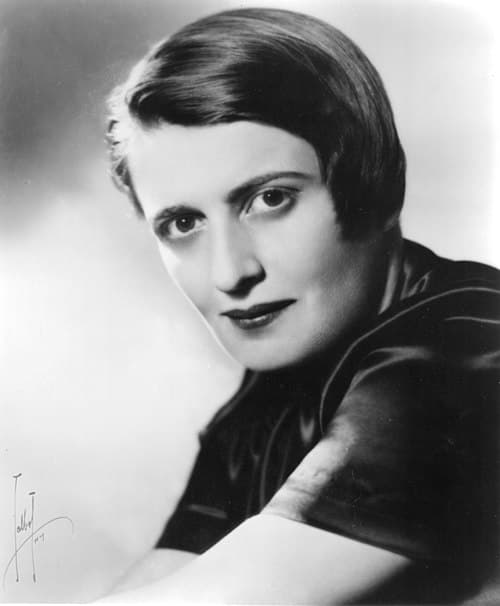
Ayn Rand
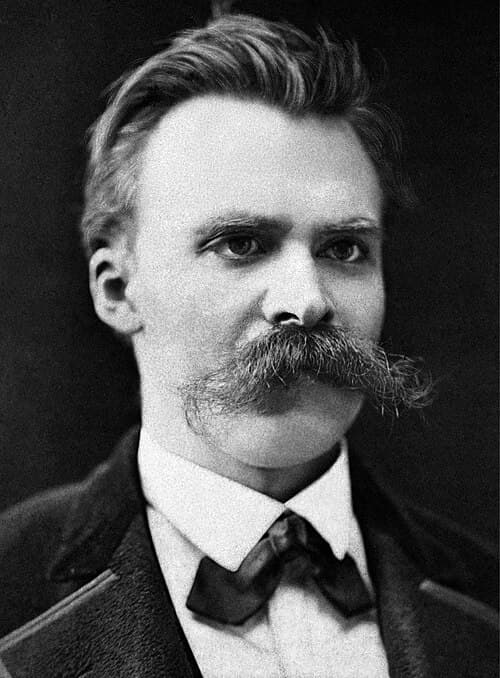
Friedrich Nietzsche

Hillary Clinton

Vladimir Putin

Mark Zuckerberg

Jane Austen
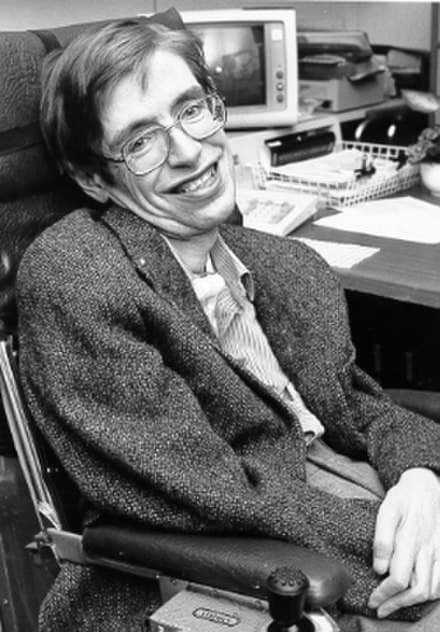
Stephen Hawking

Cillian Murphy

Jay-Z
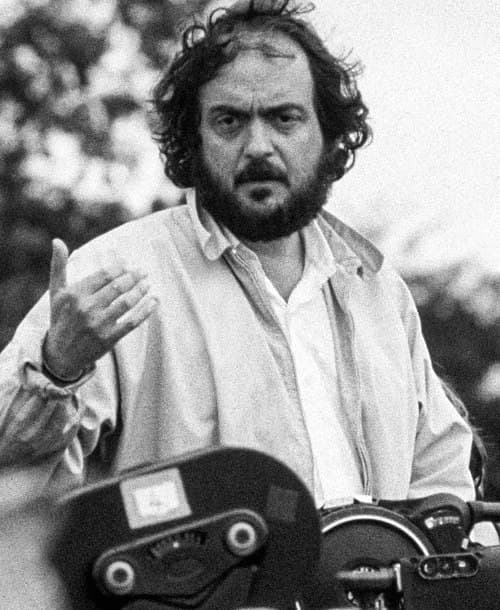
Stanley Kubrick

Samantha Power

Ludwig van Beethoven

Martina Navratilova
The INTJ profile maps distinctly to the PRISM-7 framework through a specific constellation of traits. They exhibit High Openness (specifically in the sub-facets of inquisitiveness and unconventionality, though not necessarily aesthetic fantasy), combined with High Conscientiousness (specifically organization and prudence). This combination creates the 'Visionary Implementer' archetype—someone who dreams big but plans meticulously.
Crucially, PRISM-7 reveals nuances MBTI misses: Honesty-Humility is the variable that determines whether an INTJ becomes a principled reformer (High H-H) or a manipulative mastermind (Low H-H). While MBTI lumps all INTJs together, PRISM-7 distinguishes between the altruistic strategist and the Machiavellian schemer. Additionally, their Low Extraversion is often coupled with Variable Adaptability; while they are intellectually flexible (changing minds based on data), they can be behaviorally rigid. Finally, their Emotional Resilience is often high regarding external stressors but complex internally, masking deep sensitivity.
While MBTI is popular and can provide useful frameworks for self-reflection, the scientific community has identified significant limitations:
Poor Reliability
39-76% of people get a different type when retaking the test after just 5 weeks. Your "type" shouldn't change that often.
False Dichotomies
You're not "T or F"—personality traits exist on a spectrum. Someone scoring 51% Thinking is treated the same as someone scoring 99%.
Barnum Effect
Type descriptions are often vague enough that most people would agree with them regardless of their actual type.
The PRISM-7 Difference
- 85-92% test-retest reliability — your results stay consistent
- Dimensional scores — see exactly where you fall on each trait
- Confidence intervals — know the precision of your results
- Based on HEXACO+ — the most validated model in modern psychology
Ready for a More Accurate Assessment?
Discover your true personality profile with PRISM-7—the scientifically-validated evolution of personality assessment. Free, no signup required.
Take the Free PRISM-7 Assessment