To inhabit the mind of an ISFJ is to live within a rich, meticulously cataloged library of human experience. Unlike types who live for the adrenaline of the unknown, the ISFJ finds profound meaning in continuity, anchoring their identity in the preservation of what has proven to be good, true, and safe. Their internal world is a vivid tapestry of sensory memories—the exact smell of their grandmother's kitchen, the specific tone of a partner's voice when they were disappointed three years ago, the texture of a comforting blanket. This is not mere nostalgia; it is a distinctive cognitive framework (Introverted Sensing) that uses the past as a high-fidelity map for navigating the present. By constantly comparing current experiences against this internal database, they detect the slightest deviations in their environment, making them unparalleled at noticing when a loved one is subtly distressed or when a project has drifted specifically off course.
The developmental trajectory of an ISFJ often begins in childhood with a premature sense of responsibility. Many recall being the 'peacekeeper' sibling or the child who felt an innate duty to not burden their parents. This early-formed contract with the world—'If I am good, reliable, and selfless, I will maintain harmony'—becomes the bedrock of their adult personality. Over time, this evolves into a sophisticated radar for social equilibrium. They do not just observe emotional states; they metabolize them. When walking into a tense room, the ISFJ feels the discord physically, driving an almost compulsive need to resolve the tension, often at the expense of their own comfort. This creates a lifelong tension between their desire to be honest about their feelings and their overwhelming imperative to be 'nice.'
A profound paradox exists at the core of the ISFJ personality: they are fragile yet indestructible. They may be deeply wounded by a careless critique, ruminating on it for days, yet they possess a grit that allows them to endure hardships that would break tougher-seeming types. They are the ones who stay at the hospital bedside for 72 hours straight, who rebuild their lives quietly after tragedy, and who maintain the family structure when everyone else has fallen apart. Their resilience is not loud or aggressive; it is the resilience of water wearing down stone—constant, yielding, yet ultimately unstoppable in its course. This quiet fortitude often leads others to mistake their gentleness for weakness, a miscalculation that underestimates the steel spine beneath the velvet exterior.
What other types fail to replicate is the ISFJ's specific brand of personalized care. An ENFJ might inspire you to change your life, and an ESFJ might host a fantastic party for you, but an ISFJ will bring you the specific soup you liked five years ago when you had the flu, along with a handwritten note referencing a joke you shared last month. This hyper-specific attentiveness creates a sense of being deeply 'known' that is intoxicating to their partners and friends. In a world that is increasingly fast-paced and impersonal, the ISFJ offers a sanctuary of deliberate, remembered intimacy.
Their cognitive stack also makes them accidental archivists of the human condition. Because they value the past, they are often the ones who preserve family recipes, digitize old photos, or maintain the oral history of an organization. They understand instinctively that identity is built on memory. Without the ISFJ, groups lose their history and, consequently, their soul. They anchor us to who we were, which provides the necessary context for who we are becoming.
Cognitive Function Stack
For the ISFJ, Si is not merely 'memory'; it is a vivid, somatic anchor to reality. This function constantly captures sensory data—the temperature of the room, the tone of a voice, the layout of a spreadsheet—and overlays it with a rich tapestry of past experiences to evaluate the present. In daily decisions, this manifests as a strong preference for 'tried and true' methods over experimental ones.
Fe is the ISFJ’s tool for interaction and their primary decision-making criteria in social contexts. Unlike Fi, which asks 'How do I feel about this?', Fe asks 'How will this affect the group harmony?' This function makes the ISFJ hyper-vigilant to the emotional temperature of a room. They absorb the moods of others through osmosis; if a colleague is stressed, the ISFJ feels physically tense.
Often the most underestimated part of the ISFJ’s arsenal, Ti provides a cool, detached logic that runs in the background beneath their warm exterior. While Fe dictates their outward behavior, Ti dictates their internal judgment. This function allows ISFJs to analyze systems, categorize data, and spot logical inconsistencies with surprising sharpness.
As the inferior function, Ne represents the ISFJ’s subconscious vulnerability: the fear of the unknown and the unpredictable. While Ne dominants (like ENTPs) thrive on chaos and possibility, the ISFJ finds it destabilizing. This manifests as 'catastrophizing'—a sudden spiral of negative 'what-if' scenarios triggered by ambiguity.
Introverted Sensing
Extraverted Feeling
Introverted Thinking
Extraverted Intuition
ISFJ cognitive function stack (strongest → weakest)
Practical Altruism
While many types feel empathy, the ISFJ translates empathy into logistics. They don't just say 'I'm sorry you're sick'; they show up with a care package containing electrolytes, soup, and the specific magazine you like. This strength stems from the combination of Si (remembering details) and Fe (desire to help). In the workplace, they are the ones who quietly fix the broken coffee machine or reorganize the chaotic file server so everyone's day runs smoother. This is often mistaken for simple subservience, but it is actually a form of leadership through service. To develop this, ISFJs should ensure their help empowers others rather than creating dependency.
Steadfast Reliability
In a flaking culture, the ISFJ is the anchor. If they say they will be there at 8:00 AM, they are parking their car at 7:50 AM. This reliability is cognitive, not just behavioral—their Si craves closure and adherence to the plan. They view their word as a binding contract. In crises, while others may panic or brainstorm wild solutions, the ISFJ executes the necessary protocols with robotic efficiency. This strength is vital in roles requiring high trust, such as finance or healthcare. However, they must be careful not to let others exploit this trait, as colleagues may dump work on them knowing it will get done.
Meticulous Observation
The ISFJ notices everything. They are the human equivalent of a high-resolution camera, capturing micro-expressions, tone shifts, and environmental details that slide past other types. In relationships, this allows them to give the most thoughtful gifts or ask the perfect question that unlocks a partner's distress. In work, it makes them excellent quality control specialists or editors. This stems from their Si dominance, which is constantly comparing the current reality to the expected baseline. Often mistaken for 'intuition,' this is actually rapid data processing of sensory cues. They can develop this by voicing their observations more confidently in strategic meetings.
Enduring Patience
ISFJs possess a high threshold for repetitive or detailed work that would madden other types. They can methodically work through a stack of paperwork, teach a child to read over months, or rehabilitate an injury with slow, steady progress. This patience is rooted in their temporal perspective—they view progress as linear and cumulative (Si) rather than needing instant breakthroughs (Ne). This makes them stabilizing forces in volatile environments. However, this patience can become a weakness if they stay in toxic situations (bad jobs or relationships) for too long, hoping that steady effort will eventually fix fundamental incompatibilities.
The Martyrdom Trap
ISFJs often fall into a pattern of over-functioning to compensate for others' under-functioning. They will quietly pick up the slack, clean the mess, and stay late, all while building a reservoir of secret resentment. The cognitive trap here is Fe failing to communicate needs, hoping others will use their Fe to 'just know' the ISFJ is overwhelmed. When others fail to read their mind, the ISFJ feels unappreciated. This leads to passive-aggressive outbursts or sudden burnout. The mitigation is learning that 'silent suffering' is not a virtue but a communication failure; they must verbalize their capacity limits before they are reached.
Catastrophizing Change
When routines are disrupted or new systems are introduced, the ISFJ's inferior Ne can trigger a disproportionate anxiety response. A software update at work can feel like a threat to their competence; a change in weekend plans can ruin their mood. They tend to focus exclusively on what will be lost rather than what might be gained. This rigidity can stall their careers, as they may refuse promotions that require new ways of working. To combat this, ISFJs need to consciously practice 'micro-adaptations'—small changes in routine—to build tolerance for the unknown and reframe change as an extension of the past rather than a break from it.
Conflict Paralysis
The ISFJ preserves harmony at almost any cost. They will agree to things they don't want to do, suppress valid critiques, and apologize when they haven't done anything wrong, simply to de-escalate tension. This avoidance reinforces bad behavior in others and erodes the ISFJ's self-respect. In relationships, this leads to a dynamic where the ISFJ is the 'doormat,' and in business, it means they struggle to negotiate salaries or manage underperforming staff. The growth path involves reframing conflict not as a failure of kindness, but as a necessary tool for honesty—viewing 'tough conversations' as a way to protect the relationship's long-term health.
Contextual Over-Dependency
ISFJs rely heavily on external validation and established rules to determine their worth. They struggle to internalize their own value independent of their utility to others. If they aren't 'helping' or 'working,' they feel guilty or invisible. This makes them vulnerable to manipulation by narcissists or demanding organizations that feed on their need for approval. They often lack a strong internal moral compass that operates independently of social consensus (unlike Fi users). Developing a stronger sense of self-identity—hobbies done just for fun, opinions held regardless of popularity—is essential for their psychological independence.
Think You're an ISFJ?
MBTI categories can be misleading. Get a more accurate, dimensional assessment with confidence intervals that show where you truly fall on each trait.
Take the Free PRISM-7 AssessmentISFJ in Relationships
In romance, the ISFJ is the archetype of the 'marrying kind.' They take dating seriously, often looking for a long-term partner with whom to build a traditional, stable life. They show love through 'acts of service' on steroids—fixing your car, organizing your taxes, or cooking your favorite meal after a bad day. They crave a partner who provides the appreciation and verbal affirmation they rarely ask for but desperately need.
The ISFJ friend is the one who remembers your birthday, your children's names, and the allergy you mentioned once five years ago. They are not fair-weather friends; they are the ones who show up to help you move house or sit with you in the hospital waiting room. They prefer a tight circle of deep connections over a wide network of acquaintances.
Colleagues view the ISFJ as the bedrock of the team—the person who knows where every file is and how every process works. They are diligent, respectful of hierarchy, and averse to office politics. They thrive in roles with clear expectations and tangible results, often gravitating toward the 'protector' or 'assistant' archetypes.
Deep Dive: ISFJ Guides
ISFJ Learning Style
How this type learns best
ISFJ Career Guide
Best career paths and workplace advice
ISFJ Relationships
Love, dating, and connection
ISFJ Communication
How to communicate effectively
ISFJ Stress & Coping
Managing stress and building resilience
ISFJ Leadership
Leadership style and management
ISFJ Personal Growth
Development and self-improvement
ISFJ At Work
Workplace dynamics and team roles
ISFJ Compatibility
Type compatibility and pairings
Registered Nurse / Nurse Practitioner
This is often cited as the quintessential ISFJ career for good reason. It perfectly synthesizes their cognitive strengths: Si for monitoring patient vitals against baselines and managing complex medication schedules, and Fe for providing compassionate bedside manner. The structured environment of a hospital appeals to their need for order, while the direct service to others satisfies their altruism. Warning sign: High burnout risk if they become too emotionally attached to patient outcomes.
Elementary School Teacher
ISFJs thrive here by creating the stable, nurturing environments young children need. Their patience allows them to handle repetitive learning curves, and their organizational skills keep the classroom running smoothly. Unlike higher education which may focus on abstract theory (N), elementary education focuses on concrete fundamentals and holistic care. The 'in loco parentis' role feels natural to them. Drain factor: Dealing with angry parents or chaotic administrative changes.
Human Resources Specialist
Specifically in roles focused on benefits, onboarding, or employee relations (rather than high-level corporate strategy). The ISFJ enjoys being the 'keeper of the culture' and ensuring employees have what they need. Their discretion and ability to keep confidences make them trusted with sensitive personnel data. They excel at the detailed compliance aspects of HR that others find tedious. Challenge: Having to fire people or enforce unpopular policies creates severe cognitive dissonance.
Executive Assistant / Office Manager
Far from a 'lower' role, a high-level EA is the brain of the operation, a role ISFJs dominate. They anticipate the executive's needs before they are spoken (Fe) and manage the complex logistics of travel and scheduling with zero errors (Si). They derive satisfaction from bringing order to chaos and being the 'right hand' to a visionary leader. Career progression often leads to Chief of Staff roles. Key fit: Must work for a leader who expresses gratitude, otherwise resentment builds.
Archivist / Museum Curator
This appeals to the ISFJ's reverence for the past and their meticulous attention to detail. Preserving physical artifacts, cataloging history, and ensuring the continuity of knowledge aligns perfectly with Introverted Sensing. It offers a quiet, structured environment away from the emotional demands of high-social-contact jobs, allowing the ISFJ to recharge while still performing a service to the community. Energizing task: Creating the perfect system for categorization.
Operationalize your boundaries. Instead of waiting for the 'right feeling' to say no, create rules: 'I do not check email after 7 PM' or 'I only commit to one social event per weekend.' Treat these as standard operating procedures (Si) rather than personal rejections (Fe). This bypasses the guilt mechanism.
Practice 'Strategic Incompetence.' You are likely doing tasks for others that they should do for themselves simply because you do them better or faster. Stop. Let the colleague struggle with the printer; let your partner fail to find the keys. If you always save them, you rob them of competence and yourself of energy.
Translate your feelings into data. When you feel overwhelmed, don't just say 'I'm stressed.' Write down the list of tasks and the hours required. Present this 'data' to your boss or partner. It is easier for you to advocate for the 'logic of the schedule' (Ti) than for your own emotional needs.
Schedule 'Worry Time.' Since your Ne wants to catastrophize, give it a container. Allow yourself 15 minutes a day to write down every terrible thing that could happen. When the time is up, close the book. This acknowledges the anxiety without letting it run your entire day.
Diversify your identity. You are likely over-invested in being 'The Helper.' Take up a solo hobby that produces nothing for anyone else—running, watercolor painting, coding. Do something that is purely for your own sensory enjoyment, unconnected to duty. This builds the internal reservoir needed to withstand criticism.

Mother Teresa

Kate Middleton
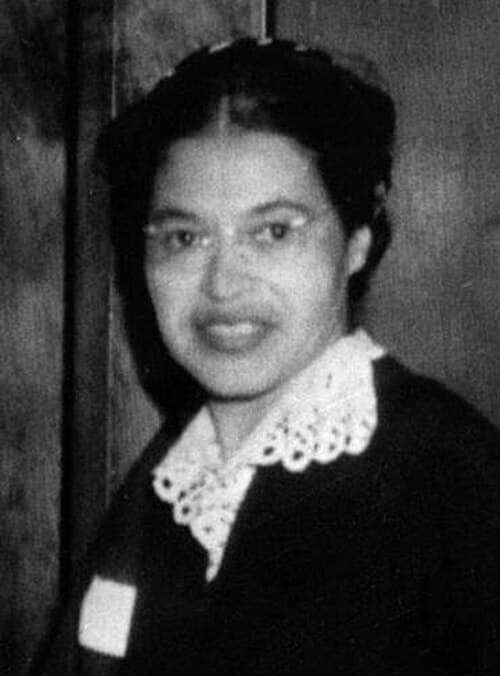
Rosa Parks

Beyoncé

Anne Hathaway

Vin Diesel

Kim Kardashian

Halle Berry

Selena Gomez

Jimmy Carter

Dr. Dre

Tiger Woods

Bruce Willis

50 Cent

Christopher Walken

Katie Holmes

Lance Armstrong
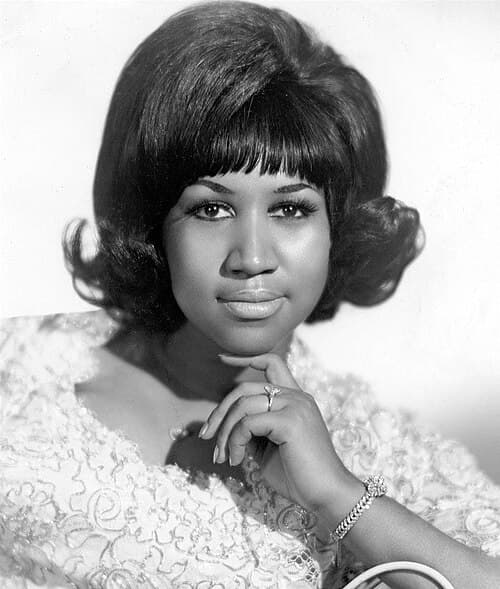
Aretha Franklin
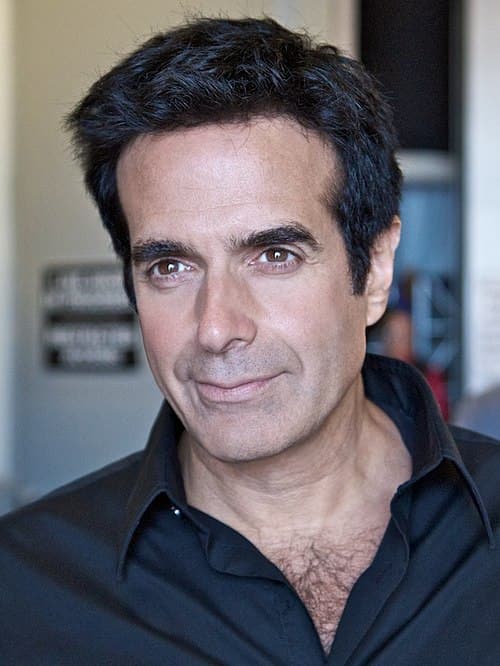
David Copperfield

Ed Sheeran
The ISFJ profile maps distinctly to the PRISM-7 model, revealing nuances that MBTI obscures. They typically score very high in Conscientiousness (specifically the sub-facets of Diligence and Prudence) and high in Agreeableness (specifically Patience and Sentimentality). However, the PRISM-7 differentiator is Honesty-Humility. ISFJs usually score exceptionally high here, indicating a lack of greed, a distaste for luxury/status seeking, and a preference for fairness over advantage. This explains why ISFJs rarely leverage their indispensable roles for power.
Furthermore, PRISM-7 recontextualizes their emotional life. While MBTI labels them 'Feelers,' PRISM-7 often shows high Emotional Resilience regarding interpersonal stress (they can handle other people's drama) but lower resilience regarding ambiguity (Adaptability). They are often high in Sentimentality (emotional attachment to the past/people), which is distinct from the 'Neuroticism' of the Big Five. The PRISM-7 model captures their specific struggle: high Conscientiousness combined with low Adaptability creates a personality that is incredibly effective in stable environments but brittle in volatile ones. This framework helps employers understand that an ISFJ's value lies in depth and consistency, not rapid pivoting.
You may find strong alignment with these PRISM-7 archetypes:
While MBTI is popular and can provide useful frameworks for self-reflection, the scientific community has identified significant limitations:
Poor Reliability
39-76% of people get a different type when retaking the test after just 5 weeks. Your "type" shouldn't change that often.
False Dichotomies
You're not "T or F"—personality traits exist on a spectrum. Someone scoring 51% Thinking is treated the same as someone scoring 99%.
Barnum Effect
Type descriptions are often vague enough that most people would agree with them regardless of their actual type.
The PRISM-7 Difference
- 85-92% test-retest reliability — your results stay consistent
- Dimensional scores — see exactly where you fall on each trait
- Confidence intervals — know the precision of your results
- Based on HEXACO+ — the most validated model in modern psychology
Ready for a More Accurate Assessment?
Discover your true personality profile with PRISM-7—the scientifically-validated evolution of personality assessment. Free, no signup required.
Take the Free PRISM-7 Assessment