To inhabit the mind of an ISTP is to live within a quiet, high-resolution command center. While the rest of the world is swept up in social narratives, status hierarchies, and emotional turbulence, the ISTP exists in a state of detached, analytical clarity. They do not simply 'see' the world; they scan it for leverage points. Every object, system, and situation is instinctively broken down into its constituent mechanics: the physics of a closing door, the logical loopholes in a tax law, the structural integrity of a bridge. This internal world is not cold—it is simply uncluttered by the 'noise' of sentimentality and social pretense that clouds the judgment of other types.
From early childhood, this type often manifests as the 'quiet tinkerer.' While other children engage in imaginative role-play, the young ISTP is likely found dismantling a radio to see where the voices come from or climbing the highest tree to understand the limits of their own balance. This early drive is often misunderstood by parents and teachers as destructiveness or hyperactivity. In reality, it is the genesis of their primary mode of learning: kinetic interrogation. They cannot trust a theory until they have tested it against physical reality. If the map disagrees with the terrain, the ISTP burns the map.
Ultimately, the ISTP offers the world a unique form of intelligence: the wisdom of the hands and the clarity of the moment. In an increasingly virtual and theoretical world, they remain grounded in the tangible. They are the ones who realize the architecture is unsound before the building collapses; they are the ones who cut the red wire with a steady hand while everyone else is screaming. They remind us that reality is not what we wish it to be, or what we feel it should be—reality is simply what works.
Their existence is a testament to the power of economy. An ISTP will never use two words when one will do, nor two movements when one suffices. This minimalism is an aesthetic choice as much as a practical one. Whether in their speech, their lifestyle, or their work, they seek to strip away the superfluous until only the essential core remains. This makes them excellent editors, designers, and crisis managers—roles where the ability to identify and discard the unnecessary is the difference between success and failure.
Yet, this stripping away can lead to a sense of hollowness if not tempered with purpose. The danger for the ISTP is becoming a master of means with no ends—perfectly capable of doing anything, but caring about nothing. The 'drift' is a common mid-life crisis for this type, where they move from thrill to thrill or job to job, seeking a rush that lasts. The path to true fulfillment for the Virtuoso lies in finding a problem complex enough to engage their mind, meaningful enough to engage their stunted heart, and tangible enough to engage their hands.
In the workplace, they are the ultimate 'anti-bureaucrats.' They do not respect rank; they respect competence. An ISTP subordinate will quietly ignore the instructions of an incompetent manager and do the job the 'right' way. If confronted, they will simply point to the results. This makes them difficult employees in rigid hierarchies but indispensable assets in results-oriented cultures. They are the 'Spec Ops' of the workforce—best deployed alone or in small, elite teams, given a clear objective, and left completely alone to achieve it.
Cognitive Function Stack
For the ISTP, Ti is not merely a tool for thought; it is a relentless, reductive filter applied to all incoming data. Unlike Te (Extraverted Thinking), which seeks to organize the external world for efficiency, Ti seeks to organize the internal world for consistency and truth. It asks, 'Does this make sense logically?' rather than 'Is this useful?' or 'Is this polite?' This function operates like a background compiler, constantly debugging the ISTP's understanding of reality.
Se is the ISTP's hunger for high-fidelity reality. It is the function that pulls them out of their internal analytical loops and thrusts them into the physical moment. While Ti builds the model, Se gathers the data.
In the tertiary position, Ni acts as a 'gut check' or a tactical simulator. It doesn't provide the grand, long-range visions of an INTJ, but rather offers flashes of insight about where the current situation is heading. It allows the ISTP to anticipate the immediate future—'If I cut this wire, the tension will snap that bracket.' As they mature, ISTPs develop a unique relationship with Ni, using it to synthesize their vast library of physical experiences into instinctual wisdom.
Fe is the Achilles' heel of the ISTP, representing their deep-seated insecurity about social connection and emotional validation. Because it is the inferior function, emotional nuance feels like a foreign language they haven't mastered. They fear being socially awkward, inadvertently offending others, or being emotionally manipulated.
Introverted Thinking
Extraverted Sensing
Introverted Intuition
Extraverted Feeling
ISTP cognitive function stack (strongest → weakest)
Crisis Architecture
While other types become cognitively flooded during emergencies, the ISTP engages a unique cognitive gear. Their heart rate often slows, their focus narrows, and they enter a state of 'flow' where time seems to dilate. This isn't just bravery; it's a neurological advantage rooted in high Emotional Resilience and Se-dominance. In a workplace scenario, when a critical database fails or a physical accident occurs, the ISTP bypasses panic and immediately begins triaging the system. They don't waste time asking 'whose fault is this?'; they ask 'what is the current state and what is the immediate fix?' This ability to decouple emotion from action makes them unparalleled first responders and troubleshooters.
Radical Efficiency
The ISTP views energy expenditure as a budget to be strictly managed. Their Ti-Se combination is constantly calculating the 'path of least resistance' to a desired outcome. This often gets mistaken for laziness, but it is actually extreme optimization. If a standard procedure requires ten steps, the ISTP will find a way to do it in three. In a corporate setting, they are the ones who automate their own jobs or create macros to handle repetitive tasks. They strip away the superfluous—useless meetings, redundant paperwork, polite preambles—to focus entirely on the lever that moves the mountain. They are masters of the '80/20 rule' before they even read the book.
Tactical Adaptability
PRISM-7 identifies this as the core differentiator of the type. Unlike J-types who rely on a plan, the ISTP relies on their ability to improvise. They possess 'cognitive agility'—the ability to discard a strategy the moment it stops working and pivot to a new one without sentimental attachment to the original plan. In negotiations, sports, or technical repair, this allows them to outmaneuver rigid opponents. They don't try to force reality to fit a model; they fluidly reshape their approach to fit the changing reality. This makes them formidable in unpredictable environments where rules are in flux.
Honest Objectivity
Because their thinking is detached from sentiment (Low Fe) and focused on accuracy (Ti), ISTPs are often the only ones in the room willing to state the brutal truth. They do not 'spin' information. If a project is doomed, they will say so. If the Emperor has no clothes, they will point it out—not to be mean, but because it is a factual observation. In environments plagued by groupthink or political correctness, the ISTP's grounded realism acts as a crucial anchor. They provide the raw data necessary for valid decision-making, serving as a check against collective delusion.
The 'Black Box' Communication Style
ISTPs process massive amounts of information internally (Ti) and only output the final result. They often fail to 'show their work,' leading colleagues and partners to feel excluded or confused. In a relationship, an ISTP might decide to buy a house or quit a job after months of internal deliberation, announcing it as a fait accompli, leaving their partner shocked. They assume that because the logic is clear to them, it must be obvious to everyone. This lack of communicative transparency creates trust gaps, as others cannot predict the ISTP's moves and may view them as secretive or uncooperative.
Disregard for 'Soft' Rules
Driven by logic and efficiency, ISTPs often view social rituals, dress codes, and bureaucratic protocols as stupid impediments to be ignored. However, they underestimate the 'social capital' cost of this behavior. By skipping the office birthday party or ignoring the email formatting rules, they alienate the gatekeepers of their career or social circle. They fail to realize that in human systems, 'likability' and 'compliance' are often functional requirements for success. This blindspot can lead to career stagnation, where they are the most skilled person in the room but the least promoted.
Commitment Phobia
The ISTP's high need for Adaptability and autonomy creates a fierce resistance to being 'locked in.' They often view long-term plans—whether a 30-year mortgage or a marriage date—as traps that limit their future options. This can lead to a pattern of chronic non-committal behavior, where they keep one foot out the door 'just in case.' This prevents them from reaping the compounding rewards of deep investment. They may master many trades but build no legacy, or have many flings but no deep partnership, because they pull the ripcord the moment things get stagnant or demanding.
Insensitive Troubleshooting
When someone comes to an ISTP with an emotional problem, the ISTP instinctively reaches for their toolbox. They offer solutions, fixes, and logical reframes. They do not understand that the other person often just wants to be heard (validation). When their solutions are rejected, the ISTP feels confused and annoyed ('Why tell me the problem if you don't want it fixed?'). This dynamic can devastate relationships, making the ISTP appear cold and dismissive when they are actually trying to help in the only way they know how. They struggle to sit in the discomfort of unresolved emotion.
Think You're an ISTP?
MBTI categories can be misleading. Get a more accurate, dimensional assessment with confidence intervals that show where you truly fall on each trait.
Take the Free PRISM-7 AssessmentISTP in Relationships
In romance, the ISTP is the archetype of the 'Actions Speak Louder Than Words' partner. They will rarely write a sonnet or engage in hours of deep emotional processing. Instead, they show love by servicing your car, building you a custom bookshelf, or physically protecting you from harm.
Friendship with an ISTP is typically low-maintenance and activity-based. They are the 'shoulder-to-shoulder' friends rather than 'face-to-face' friends. They bond over a shared objective: fixing a motorcycle, playing a competitive video game, or playing sports.
Colleagues often view the ISTP as a mysterious, highly capable enigma. They usually keep their personal life completely sealed off from the workplace. In meetings, they are often silent until the very end, where they might drop a single sentence that cuts through an hour of circular debate.
Deep Dive: ISTP Guides
ISTP Learning Style
How this type learns best
ISTP Career Guide
Best career paths and workplace advice
ISTP Relationships
Love, dating, and connection
ISTP Communication
How to communicate effectively
ISTP Stress & Coping
Managing stress and building resilience
ISTP Leadership
Leadership style and management
ISTP Personal Growth
Development and self-improvement
ISTP At Work
Workplace dynamics and team roles
ISTP Compatibility
Type compatibility and pairings
Emergency Medicine Physician / Trauma Surgeon
This role is the pinnacle of high-stakes problem solving (Ti) and physical precision (Se). The environment is chaotic and fast-paced, requiring the ISTP's unique ability to remain emotionally detached while performing delicate manual tasks. They thrive on the variety—no two shifts are the same—and the immediate feedback loop of saving a life. Unlike general practice, which involves long-term patient relationships (Fe drain), trauma is about fixing the mechanical issue and moving on.
Forensic Engineer / Crash Investigator
This career perfectly satisfies the ISTP's detective instinct. It involves working backwards from a physical disaster to understand the logical chain of causality (Ti-Ni). It requires being on-site, examining wreckage (Se), and applying rigorous physics and logic to determine the truth. It is solitary, analytical, and devoid of the need to 'sell' anything. The ISTP acts as the voice of physical reality, determining exactly why the system failed.
Software Security Analyst / Ethical Hacker
Digital systems offer a playground for the ISTP's Ti to deconstruct logic. Penetration testing involves finding the weak points in a fortress—a challenge that delights the ISTP's tactical mind. It allows for autonomy, continuous learning (as technology evolves), and a 'cat and mouse' dynamic that simulates the thrill of the hunt. The work is judged purely on results (did you get in?), which suits their meritocratic values.
Specialized Trades (Welding, Aviation Mechanic)
These roles offer a direct connection between the mind and the hand. There is a meditative quality for the ISTP in laying a perfect bead of weld or tuning an engine to auditory perfection. These fields respect mastery and tangible output over social climbing. The risk factor in aviation or high-pressure welding adds the necessary adrenaline spike to keep them engaged, preventing the boredom that plagues them in office jobs.
Pilot / Commercial Aviator
A cockpit is a system of systems that must be managed in real-time. It appeals to the ISTP's love of machinery, their spatial awareness, and their calm in turbulence. The job is procedurally dense yet physically engaging. Crucially, it offers 'compartmentalization'—when the flight is over, the work is done. You don't take the work home with you. The lifestyle also offers the travel and variety that satisfies their Se need for new experiences.
Operationalize Your Emotions: You treat emotions as noise, but they are actually data. Just as an engine makes a specific sound when the timing belt is loose, your partner's emotional outburst is an indicator of a system need. Stop dismissing feelings as 'irrational' and start treating them as valid inputs in the human operating system. Learn the mechanics of validation: 'That sounds frustrating' is a tool, just like a wrench. Use it.
The 10-Year Simulation: Your bias is toward the immediate (Se). You optimize for today at the expense of next year. Force your Ni (Intuition) to run a simulation: 'If I continue this behavior for 10 years, where do I end up?' Apply your logic to your own trajectory. You will often find that the 'efficient' choice today (skipping the gym, ignoring the savings account) is logically inefficient over the long term.
Documentation as a Protocol: You hate explaining yourself, but this limits your influence. If you want your brilliant solutions to be adopted, you must build a bridge to other minds. View communication not as a chore, but as the final step of the engineering process. A solution that no one understands is a failed prototype. Practice 'showing your work'—explain the 'why' before the 'what.'
Scheduled Freedom: You resist routine because it feels like a cage. However, a total lack of structure leads to the 'laziness loop.' Reframe discipline: Structure is the scaffold that enables freedom. By automating the boring parts of life (bills, chores, workout times), you free up more CPU cycles for the projects you actually care about. Build a routine so you don't have to think about it.
The Social API: You don't have to genuinely feel social excitement to perform well socially. Treat social interaction like a protocol or an API. Learn the handshake, the greeting, the small talk algorithms. It is not 'fake'; it is a user interface for interacting with the human network. Mastering this interface will remove 90% of the friction in your career and relationships.

Clint Eastwood

Michael Jordan

Amelia Earhart

Bruce Lee

Tom Cruise

Scarlett Johansson

Daniel Craig

Kristen Stewart

Steve McQueen

Vladimir Putin

Megan Fox

Bear Grylls

Keith Richards

Chuck Yeager

Milla Jovovich

Eminem

Simon Cowell

Tiger Woods
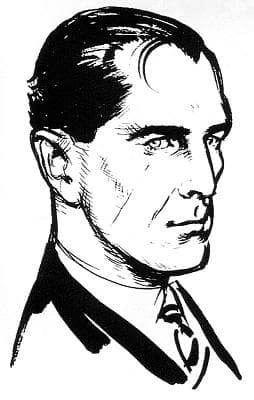
James Bond

Katharine Hepburn
The PRISM-7 model illuminates the specific 'flavor' of the ISTP that MBTI obscures. The core signature is Low Extraversion paired with High Adaptability and Low Agreeableness.
- High Adaptability: This is the defining trait. While MBTI calls this 'Perceiving,' PRISM-7 specifies it as 'psychological flexibility'—the capacity to pivot instantly without stress. This separates them from rigid introverts.
- Low Agreeableness: This is not 'meanness,' but 'rational detachment.' They prioritize objective truth over social harmony. MBTI often conflates Thinking with 'planning,' but PRISM-7 clarifies that you can be a Thinker who is chaotic (High Adaptability).
- Honesty-Humility Variance: This is the crucial HEXACO addition. ISTPs split into two camps here. High H-H ISTPs are the 'Honest Craftsmen'—direct, fair, and unpretentious. Low H-H ISTPs are the 'Operators'—manipulative, rule-breaking, and prone to risk-taking behavior for personal gain. MBTI cannot distinguish between the ethical mechanic and the con artist; PRISM-7 can.
- Emotional Resilience: Typically High. They experience low anxiety and low sentimentality, allowing them to function where others freeze.
You may find strong alignment with these PRISM-7 archetypes:
While MBTI is popular and can provide useful frameworks for self-reflection, the scientific community has identified significant limitations:
Poor Reliability
39-76% of people get a different type when retaking the test after just 5 weeks. Your "type" shouldn't change that often.
False Dichotomies
You're not "T or F"—personality traits exist on a spectrum. Someone scoring 51% Thinking is treated the same as someone scoring 99%.
Barnum Effect
Type descriptions are often vague enough that most people would agree with them regardless of their actual type.
The PRISM-7 Difference
- 85-92% test-retest reliability — your results stay consistent
- Dimensional scores — see exactly where you fall on each trait
- Confidence intervals — know the precision of your results
- Based on HEXACO+ — the most validated model in modern psychology
Ready for a More Accurate Assessment?
Discover your true personality profile with PRISM-7—the scientifically-validated evolution of personality assessment. Free, no signup required.
Take the Free PRISM-7 Assessment