To inhabit the mind of an ESFJ is to live within a perpetual, high-resolution radar system of human emotionality. Unlike types who can retreat into abstract thought or solitary tasks, the ESFJ’s consciousness is inextricably tethered to the social web around them. They do not merely 'enter' a room; they unconsciously scan it, registering the emotional temperature, the subtle hierarchies, the unspoken tensions, and the physical comfort of every individual present. This is not a passive observation but an active, almost compulsive cognitive process. If a colleague sighs three desks away, the ESFJ’s internal alarm triggers. If a friend’s smile doesn't quite reach their eyes, the ESFJ catalogs this anomaly for immediate or future intervention. Their internal world is a tapestry woven from the needs, schedules, and preferences of their tribe, often leaving them with a cognitive load that others would find crushing.
The developmental trajectory of the ESFJ often begins in childhood as the 'responsible mediator' or the 'social translator.' They were likely the children who intuitively understood what pleased the teacher, how to de-escalate a playground argument, or exactly what behavior would secure their parents' approval. This early attunement to external feedback loops creates a profound sensitivity to social cause and effect. Over time, this solidifies into a worldview where safety and success are synonymous with social harmony. They learn that if the group is cohesive, the individual is safe; if the rules are followed, chaos is held at bay. This is not blind conformity, but a learned survival strategy rooted in the belief that established protocols exist to protect people from the messiness of unbridled individualism.
In the ecosystem of personality, the ESFJ offers a gift that is increasingly rare in a fragmented, digital world: the creation of physical community. While others connect via abstract ideas or digital avatars, the ESFJ insists on the potluck, the reunion, the handshake, and the eye contact. They are the custodians of the 'third place'—those social environments distinct from home and work where community happens. They understand instinctively that human bonds are maintained not through grand gestures, but through the ritualistic repetition of small kindnesses and shared experiences.
Cognitive Function Stack
For the ESFJ, Extraverted Feeling is not merely an emotion; it is a decision-making imperative and a sensory organ for social dynamics. It functions as a continuous, high-speed feedback loop that assesses the emotional state of the environment and calculates the actions required to optimize harmony. Unlike Introverted Feeling (Fi), which asks 'Is this authentic to me?', Fe asks 'Is this acceptable to us?'.
Introverted Sensing provides the structural blueprint for the ESFJ's life. It is a vast, internal library of sensory experiences, traditions, and established protocols. Where Fe provides the 'why' (to make people happy), Si provides the 'how' (by using the method that worked last time).
In the tertiary position, Extraverted Intuition acts as the ESFJ's 'relief valve' and source of playful creativity. While Si focuses on what is and what was, Ne tentatively explores what could be. It manifests in the ESFJ's ability to brainstorm fun themes for parties, come up with backup plans when logistics fail, or entertain 'safe' deviations from the norm.
Introverted Thinking is the ESFJ's Achilles' heel, representing the detached, impersonal logic that often feels antithetical to their warm, people-centric worldview. Ti demands internal consistency and objective analysis, regardless of how it makes people feel. For the ESFJ, relying on pure logic without the buffer of social consensus creates deep insecurity.
Extraverted Feeling
Introverted Sensing
Extraverted Intuition
Introverted Thinking
ESFJ cognitive function stack (strongest → weakest)
Architectural Social Intelligence
ESFJs possess a form of intelligence that is often dismissed but is structurally vital: the ability to map and manipulate social networks. This isn't just 'being friendly'; it is a strategic understanding of human leverage. In a workplace, an ESFJ knows exactly who the informal opinion leaders are, who needs to be stroked to get a project approved, and how to frame a request so it appeals to the group's values. They can walk into a toxic team environment and, through a series of micro-interventions—remembering names, bringing food, acknowledging unseen work—rebuild the psychological safety required for productivity. They are the masters of 'soft power.'
Logistical Empathy
Empathy for an ESFJ is a verb, not a feeling. While other types might feel bad for someone, the ESFJ translates that feeling into a concrete action plan. If a friend is grieving, the ESFJ doesn't just offer condolences; they organize a meal train, handle the laundry, and screen phone calls. This strength combines their dominant Fe (desire to help) with auxiliary Si (mastery of detail). They anticipate needs before they are voiced. This 'logistical empathy' creates a profound sense of security for those around them, as people learn they can rely on the ESFJ to handle the practicalities of life when they are too overwhelmed to do so themselves.
Stewardship of Continuity
In an era of rapid disruption, the ESFJ provides the stabilizing force of continuity. They are the keepers of institutional memory. Whether in a corporation or a family, the ESFJ ensures that valuable traditions and hard-won lessons are not discarded in the pursuit of the new. They create the rituals—the Friday stand-up meetings, the annual retreats, the holiday customs—that transform a group of individuals into a cohesive culture. This strength anchors teams during times of chaos, providing a familiar framework that reduces anxiety and preserves the group's identity. They allow others to move forward by ensuring the foundation remains solid.
Dutiful Reliability
The ESFJ views a commitment not as a casual intention but as a binding social contract. If they say they will be there at 8:00 AM, they are there at 7:55 AM, prepared and ready. This reliability stems from a deep-seated fear of letting others down (Fe) and a respect for order (Si). In professional settings, this makes them invaluable project managers and administrators. They do not require constant oversight because their internal taskmaster is far stricter than any boss could be. They are the ones who catch the details others miss, ensuring that the execution of a plan matches the vision.
The Validation Trap
Because their self-esteem is externally regulated via Extraverted Feeling, ESFJs are perilously vulnerable to the opinions of others. They can become 'approval addicts,' bending over backward to please people who do not have their best interests at heart. This can lead to a loss of identity, where the ESFJ no longer knows what they want, only what others expect. In leadership, this manifests as difficulty making unpopular but necessary decisions. They may delay firing a toxic employee or cutting a failing project because they cannot bear the immediate social discomfort, ultimately causing more damage to the team in the long run.
Weaponized Harmony
The ESFJ's drive for harmony can sometimes mutate into a form of control. 'Peace' becomes the suppression of dissent. They may view valid criticism or necessary conflict as 'rudeness' or 'betrayal.' In an effort to maintain a pleasant surface, they might engage in passive-aggressive behavior, gossiping to enforce social norms rather than addressing issues directly. This 'toxic positivity' can suffocate authentic communication. Colleagues may feel they have to walk on eggshells, unable to raise legitimate concerns for fear of upsetting the ESFJ or disrupting the manufactured consensus.
Context-Blind Rigidity
Relying heavily on Introverted Sensing, ESFJs often judge the present against the template of the past. This creates a blindspot when facing novel problems that require innovative solutions. They may insist on following the 'proper procedure' even when the context has completely changed, viewing efficiency hacks or new methodologies as lazy or disrespectful. This rigidity can make them judgmental of types who prioritize improvisation (like ENFPs or ESTPs). They risk becoming the bureaucratic bottleneck, enforcing rules that no longer serve a purpose simply because 'that's how we've always done it.'
Self-Sacrificial Burnout
The ESFJ often operates on a deficit economy of care: they export care at a high volume but import it rarely. They have difficulty articulating their own needs, expecting others to intuitively notice and meet them just as they do for others (the 'covert contract'). When this doesn't happen, resentment builds. They may work until physical collapse, ignoring bodily signals of exhaustion, because resting feels like 'selfishness.' This blindspot often leads to sudden, overwhelming burnout or somatic health issues, as their body forces the rest that their mind refuses to grant.
Think You're an ESFJ?
MBTI categories can be misleading. Get a more accurate, dimensional assessment with confidence intervals that show where you truly fall on each trait.
Take the Free PRISM-7 AssessmentESFJ in Relationships
In romance, the ESFJ is the quintessential 'nester.' They do not just date a person; they integrate them into a carefully constructed ecosystem of care, family, and tradition. Love, for an ESFJ, is a verb. It looks like a packed lunch with a note, a perfectly organized surprise party, or sitting by a hospital bed for three days straight.
As friends, ESFJs are the 'Social Hubs'—the ones who initiate the group chat, plan the annual trip, and remember the names of your distant cousins. They offer a high-investment friendship; they show up for the move, the breakup, and the celebration. They expect their friends to adhere to the 'social contract' of friendship: reciprocity, loyalty, and showing up.
In the office, the ESFJ is the cultural immune system. They are often the first to notice when morale is dipping or when a new policy is causing anxiety. They excel in roles that require bridging the gap between management goals and employee wellbeing.
Deep Dive: ESFJ Guides
ESFJ Learning Style
How this type learns best
ESFJ Career Guide
Best career paths and workplace advice
ESFJ Relationships
Love, dating, and connection
ESFJ Communication
How to communicate effectively
ESFJ Stress & Coping
Managing stress and building resilience
ESFJ Leadership
Leadership style and management
ESFJ Personal Growth
Development and self-improvement
ESFJ At Work
Workplace dynamics and team roles
ESFJ Compatibility
Type compatibility and pairings
Medical Administration / Nursing
This field offers the perfect synthesis of the ESFJ’s cognitive stack. It requires high empathy (Fe) to comfort patients and navigate emotional family dynamics, combined with rigorous attention to detail and protocol (Si) to manage medications, schedules, and records. An ESFJ nurse is the one who remembers that the patient in room 304 needs their pillow adjusted just so. The clear hierarchy and structured environment provide the safety they crave, while the direct service to others fulfills their need for purpose. Burnout is a risk, but the tangible impact of the work is highly energizing.
Corporate Event Planner
Event planning monetizes the ESFJ's natural anxiety about details and their desire for social harmony. It utilizes their Ne (brainstorming themes) and Si (executing logistics checklists) in service of Fe (creating an experience for others). The ESFJ thrives on the adrenaline of the 'day of,' orchestrating vendors, guests, and timelines to ensure perfection. They are uniquely capable of handling the high-stress, high-touch nature of this role, anticipating problems before they occur. The visible result—a room full of happy people—provides the immediate validation they crave.
Human Resources Director
While some view HR as bureaucratic, the ESFJ sees it as the stewardship of the company's culture. This role allows them to protect employees, mediate conflicts, and organize the social rituals of the workplace. They excel at onboarding, making new hires feel instantly welcome and integrated. Their ability to sense the emotional undercurrents of an office makes them excellent at employee relations. However, they must be wary of roles requiring mass layoffs or ruthless efficiency measures, which will conflict violently with their Fe values.
Elementary Education
The classroom is a mini-society that requires constant emotional regulation and structural consistency—the ESFJ's playground. They excel at creating warm, inviting environments where children feel safe to learn. Their Si helps them manage lesson plans and grading with precision, while their Fe allows them to connect with students and parents deeply. The cyclical nature of the school year (holidays, semesters) appeals to their love of tradition. They are often the teachers who stay late to decorate the classroom and worry about their students' home lives.
Real Estate Agent
This is not just sales; it is guiding people through a major life transition. The ESFJ succeeds here by building genuine trust. They remember the client's kids' names, their fear of basements, and their desire for a breakfast nook. They use their local network (Fe) to find buyers and their organizational skills (Si) to manage the mountains of paperwork. The role is social, community-focused, and results-oriented. The ESFJ agent becomes a fixture in the community, turning clients into lifelong friends.
Decouple your self-worth from your utility. You have inherent value simply by existing, not just by serving. Practice doing nothing for an hour a day—no chores, no favors, no planning. Sit with the discomfort of being 'unproductive' and realize the world does not end. This builds the internal resilience needed to resist burnout.
Audit your 'Covert Contracts.' You often do things for others with a secret expectation of how they should react. When they don't follow your script, you feel resentful. Make these contracts overt or cancel them. Either ask directly for what you need ('I need a hug today') or give freely without any expectation of return.
Embrace the 'Bad Guy' role occasionally. Your fear of conflict often leads to bigger problems down the road. Practice 'compassionate directness.' Understand that setting a boundary or giving negative feedback is actually a form of care—it protects the relationship from the rot of unspoken resentment. Start with small refusals and work your way up.
Challenge your Introverted Sensing rigidity. When you feel the knee-jerk reaction that something is 'wrong' just because it's new or different, pause. Ask: 'Is this actually harmful, or just unfamiliar?' consciously expose yourself to environments where your social rules don't apply to stretch your cognitive flexibility.
Develop your Introverted Thinking (Ti). Engage in activities that require impersonal logic—Sudoku, coding, strategy games, or philosophy. Learn to analyze a situation based purely on facts and data, stripping away the human element for a moment. This doesn't replace your empathy, but gives you a necessary counter-balance to avoid being manipulated by emotion.

Taylor Swift

Bill Clinton

Jennifer Garner

Steve Harvey

Hugh Jackman

Danny DeVito

Mariah Carey

Jennifer Lopez

Whitney Houston

Tyra Banks

Larry King
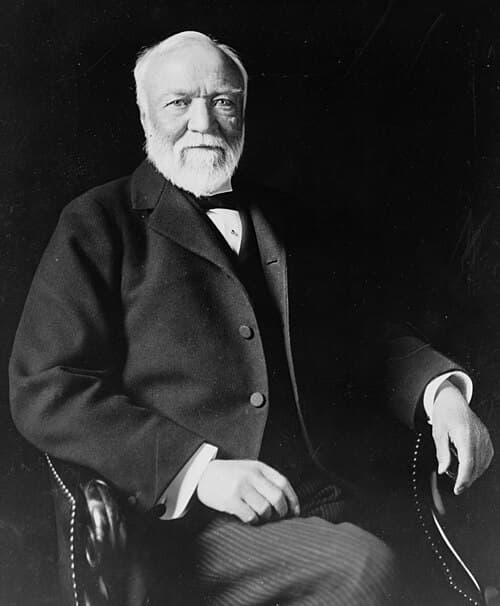
Andrew Carnegie

Desmond Tutu

Sally Field

Nancy Reagan

Mary Tyler Moore

Pope John Paul II

Elton John

Prince William

Céline Dion
In the PRISM-7 framework, the ESFJ profile reveals critical nuances that MBTI obscures. They typically score exceptionally high in Extraversion (specifically the sub-facets of 'Sociability' and 'Positive Energy'), driving their need for interaction. They are also high in Conscientiousness (specifically 'Orderliness' and 'Diligence'), which explains their logistical prowess. Their high Agreeableness is often misinterpreted as weakness, but PRISM-7 clarifies this as high 'Cooperation' and 'Forgiveness,' though they may score lower on 'Flexibility.'
The most crucial addition from HEXACO+ is the Honesty-Humility dimension, which splits the ESFJ into two distinct subtypes. An ESFJ with high Honesty-Humility is the genuine altruist—the selfless nurse or community pillar. An ESFJ with low Honesty-Humility, however, manifests as the status-conscious social climber who uses gossip and manipulation to maintain hierarchy. MBTI conflates these into one type, but PRISM-7 distinguishes the 'Servant Leader' from the 'Social Manipulator.' Furthermore, PRISM-7 often reveals a lower score in Adaptability for this type, highlighting their struggle with rapid change and ambiguity—a specific vulnerability that their high social skills often mask.
While MBTI is popular and can provide useful frameworks for self-reflection, the scientific community has identified significant limitations:
Poor Reliability
39-76% of people get a different type when retaking the test after just 5 weeks. Your "type" shouldn't change that often.
False Dichotomies
You're not "T or F"—personality traits exist on a spectrum. Someone scoring 51% Thinking is treated the same as someone scoring 99%.
Barnum Effect
Type descriptions are often vague enough that most people would agree with them regardless of their actual type.
The PRISM-7 Difference
- 85-92% test-retest reliability — your results stay consistent
- Dimensional scores — see exactly where you fall on each trait
- Confidence intervals — know the precision of your results
- Based on HEXACO+ — the most validated model in modern psychology
Ready for a More Accurate Assessment?
Discover your true personality profile with PRISM-7—the scientifically-validated evolution of personality assessment. Free, no signup required.
Take the Free PRISM-7 Assessment