To inhabit the mind of an ENTP is to live inside a high-speed particle accelerator where ideas, rather than atoms, are constantly colliding to create new forms of matter. Their internal experience is rarely quiet; it is a ceaseless, multi-track narrative of 'What if?' and 'Why not?' While others see a finished building, the ENTP sees the architectural blueprints, the potential for a rooftop garden, the structural flaws in the foundation, and three different ways the lobby could be redesigned to improve traffic flow—all within the first ten seconds of walking through the door. This is not active effort; it is their baseline state of existence. They do not choose to analyze and deconstruct reality; they are cognitively incapable of accepting things at face value without first poking them to see if they break.
This relentless cognitive churning begins early. As children, ENTPs are often the ones who exhaust their parents with endless interrogations, not to be difficult, but because they detect inconsistencies in the adult world that they feel compelled to resolve. They are the students who argue with teachers about the validity of a test question, not to improve their grade, but because the logic of the question was flawed. This developmental trajectory often creates a dichotomy: they are frequently labeled as 'gifted' for their rapid pattern recognition and vocabulary, yet simultaneously disciplined for being 'disruptive' or 'unfocused.' This early friction with authority shapes their lifelong skepticism of hierarchy and tradition.
Under high stress, an ENTP loses their signature flexibility. They become pedantic, withdrawn, and cynical. They stop seeing possibilities and start seeing only inevitable failure. Conversely, when operating at their peak, they are a force of nature—a bridge between the abstract and the concrete. They possess the unique gift of 'trans-contextual thinking,' the ability to take a solution from biology and apply it to software engineering, or use a concept from jazz improvisation to restructure a corporate hierarchy. They are the ultimate generalists in a world of specialists, refusing to be boxed in, and in doing so, they remind the rest of us that boundaries are mostly imaginary.
Ultimately, the ENTP is the antidote to stagnation. In a PRISM-7 context, they represent the extreme upper bound of Openness and Adaptability, constantly injecting entropy into closed systems. While they may leave a trail of unfinished projects and exhausted colleagues in their wake, they are also the ones who find the escape hatch when everyone else is trapped. They don't just think outside the box; they disassemble the box and build a rocket ship out of the cardboard.
Cognitive Function Stack
For the ENTP, Ne is not merely a function; it is a sensory organ that perceives the metaphysical connections between objects rather than the objects themselves. While a Sensor sees a coffee cup, the ENTP sees the supply chain of the beans, the thermodynamics of the heat transfer, the social ritual of caffeine consumption, and a potential business model for a self-heating mug—all simultaneously. This function drives their divergent thinking, allowing them to brainstorm fifty solutions to a problem before others have fully understood the question.
If Ne is the explosion, Ti is the containment field that gives it shape. This function provides the ENTP with a ruthless internal framework for logic and consistency. Unlike Te (Extraverted Thinking), which cares about efficiency and real-world metrics, Ti cares about accuracy and structural integrity.
Fe is the ENTP's secret weapon and their 'charm interface.' It allows them to read the emotional temperature of a room and adapt their presentation to be persuasive. Unlike the authentic, internal morality of Fi users, the ENTP's Fe is performative and adaptive—they can become whoever they need to be to get their idea across. This makes them excellent salesmen, comedians, and debaters.
the realm of stability, routine, bodily maintenance, and past precedent. Because their energy is directed outward toward future possibilities, the details of the present often escape them completely. They may lose keys, forget anniversaries, or struggle to maintain basic filing systems, viewing these tasks as oppressive drudgery.
Extraverted Intuition
Introverted Thinking
Extraverted Feeling
Introverted Sensing
ENTP cognitive function stack (strongest → weakest)
Cognitive Synthesis & Innovation
ENTPs possess a unique cognitive mechanism that allows them to synthesize information from completely unrelated domains. In a workplace scenario, while a marketing team looks at competitor ads and an engineering team looks at technical specs, the ENTP looks at a beehive's communication patterns and invents a decentralized algorithm for the new product launch. They don't just think 'outside the box'; they lack the cognitive filter that creates the box in the first place. This strength is powered by the Ne-Ti loop, which gathers disparate data points and strips them down to their fundamental logical principles to see where they overlap. It is often mistaken for mere 'creativity,' but it is actually high-level structural analysis applied creatively.
Radical Adaptability
In the PRISM-7 framework, this maps to high Adaptability and Emotional Resilience. When a project falls apart or a client changes the scope at the last minute, most types experience stress or resistance. The ENTP experiences a dopamine spike. They thrive in chaos because it forces them to improvise, which is their natural state. If they lose their job, they've already brainstormed three new career paths by lunchtime. This is not just optimism; it is a fundamental confidence in their ability to figure things out on the fly. They are the 'MacGyvers' of the personality world, able to construct a solution out of a paperclip and a rejected idea, turning immediate crises into opportunities for restructuring.
Fearless Truth-Seeking
ENTPs exhibit a form of intellectual bravery that is rare. They are willing to be the lone voice in a room questioning a popular but flawed strategy, or pointing out that the Emperor has no clothes. This stems from their Ti prioritizing accuracy over social harmony. In a boardroom, they are the ones who ask, 'Why are we doing it this way if the data says it doesn't work?' even if the CEO proposed the idea. This strength is crucial for avoiding groupthink and systemic errors. It can be developed further by learning to frame these challenges as collaborative inquiries rather than adversarial attacks. It is often mistaken for arrogance, but it is actually a deep commitment to what is true and effective.
Charismatic Evangelism
When an ENTP truly believes in an idea, their Tertiary Fe activates to make them mesmerizing communicators. They don't just present facts; they weave a narrative of possibility that brings others along for the ride. They use humor, analogy, and infectious energy to bypass people's natural resistance to change. In negotiations, they can rapidly recalibrate their arguments based on the other person's reactions, flipping from logical to emotional appeals as needed. This makes them formidable entrepreneurs and change agents. Unlike a pure salesperson, however, they struggle to sell things they find logically boring; their charisma is tied directly to their intellectual engagement with the topic.
The Implementation Gap
The ENTP's brain rewards the generation of an idea with dopamine, but offers little neurochemical reward for the execution. This leads to a graveyard of half-finished websites, business plans, and novels. In a professional context, this can brand them as unreliable or 'all talk.' The cognitive mechanism here is the dominance of Ne (possibility) over Si (maintenance). They genuinely intend to finish, but the moment the problem is 'solved' conceptually, the actual work of doing it feels like redundant data entry. Mitigation requires 'packaging' tasks: pairing with high-Conscientiousness types (like ISTJs) who enjoy execution, or gamifying the completion process.
Tactical Insensitivity
Because they view debate as a sport and a form of intimacy, ENTPs often fail to realize when they have crossed a line from 'fun sparring' to 'interrogating a crying person.' They may dismantle a colleague's cherished idea in a meeting, thinking they are helping refine it, only to be shocked when that colleague labels them a bully. This is a failure of perspective-taking—assuming everyone separates their ego from their ideas as easily as the ENTP does. In relationships, this manifests as trying to 'logic' a partner out of their emotions. The fix involves a deliberate pause to assess the emotional stakes before engaging the logical engines.
Administrative Aversion
The mundane details of life—taxes, scheduling, email replies, household chores—can induce a state of paralysis in ENTPs. It isn't just laziness; it's a form of cognitive repulsion. Their minds are tuned for high-bandwidth conceptual processing, so low-bandwidth repetitive tasks feel agonizingly under-stimulating. The real consequence is often financial penalties, missed opportunities, or friction in relationships where partners feel they have to 'parent' the ENTP. Compassionately, this is a mismatch between their neurology and modern bureaucracy. Strategies include radical outsourcing, automation, or 'body doubling' (working alongside someone else).
The 'Greener Grass' Syndrome
With Ne constantly scanning the horizon for better options, commitment can feel like a cage. Whether it's a relationship, a career path, or a city, the ENTP is haunted by the question, 'Is this it?' This fear of closing doors often leads them to keep one foot out the door, preventing them from achieving the depth and mastery that only comes with long-term dedication. They may jump ship right before a breakthrough because the novelty wore off. Growth comes from realizing that depth is a new form of infinite complexity, different from but equal to breadth.
Think You're an ENTP?
MBTI categories can be misleading. Get a more accurate, dimensional assessment with confidence intervals that show where you truly fall on each trait.
Take the Free PRISM-7 AssessmentENTP in Relationships
Loving an ENTP is like dating a fireworks display—thrilling, unpredictable, and occasionally dangerous if you stand too close. They seek a 'partner in crime' above all else; someone who can verbally spar with them, bounce between deep philosophy and trashy memes, and tolerate their erratic energy levels. A typical conflict arises when a partner comes to them for emotional validation ('I had a hard day') and the ENTP immediately jumps to problem-solving ('Well, why didn't you just tell your boss X?').
As friends, ENTPs are the instigators of the group. They are the ones who send a text at 11 PM saying, 'Let's drive to the coast and find a diner,' or 'I just bought a welding kit, come over.' They view friendship as a laboratory for ideas and experiences. They are low-maintenance in terms of emotional processing—they won't get offended if you don't call for a month—but high-maintenance in terms of stimulation.
In the office, the ENTP is the 'Chaos Pilot.' They are invaluable in the early stages of a project, during brainstorming, or when a crisis requires a complete pivot. However, they are allergic to micromanagement and 'busy work.' If placed in a role requiring repetitive data entry or strict adherence to arbitrary rules, they will either quit or automate the job and spend the rest of the time reading Wikipedia. Colleagues often misunderstand their questioning nature as insubordination.
Deep Dive: ENTP Guides
ENTP Learning Style
How this type learns best
ENTP Career Guide
Best career paths and workplace advice
ENTP Relationships
Love, dating, and connection
ENTP Communication
How to communicate effectively
ENTP Stress & Coping
Managing stress and building resilience
ENTP Leadership
Leadership style and management
ENTP Personal Growth
Development and self-improvement
ENTP At Work
Workplace dynamics and team roles
ENTP Compatibility
Type compatibility and pairings
Tech Founder / Entrepreneur
This is the archetypal ENTP role. It offers the ultimate open sandbox: high risk, high reward, and the requirement to wear multiple hats (marketing, product, strategy) simultaneously. The 'Day 1' energy of a startup—where rules are unwritten and every problem is novel—is where ENTPs peak. They can pivot the business model on a dime. Warning sign: They may struggle when the company scales and requires stable management processes, at which point they should hire a COO and move to a visionary role.
Litigator / Barrister
Law is codified debate. For an ENTP, the courtroom or the negotiation table is a game of 4D chess where they can use their Ti to find loopholes and their Fe to manipulate the jury's perception. They excel at thinking on their feet and spotting inconsistencies in witness testimony. Unlike corporate law (which is detail-heavy paperwork), litigation offers the thrill of the fight. The drain comes from the immense amount of reading and procedural filing required between the battles.
Creative Director / Strategist
In advertising or media, the Creative Director is paid to generate wild ideas and then critique them—a perfect loop for Ne and Ti. They can look at a client's boring product and find a bizarre, attention-grabbing angle that no one else saw. The role allows for constant novelty (new clients, new industries) and delegates the nitty-gritty execution to designers and copywriters. The frustration usually stems from clients who are too risk-averse to buy the ENTP's best concepts.
Venture Capitalist
VC work involves evaluating the potential of new ideas, technologies, and markets without having to run the companies themselves. It satisfies the ENTP's hunger for 'what's next' and utilizes their pattern-matching ability to predict trends. They can indulge their curiosity across biotech, crypto, and AI in the same week. The challenge is the long feedback loop—waiting years to see if their intuition was correct.
Political Consultant / Spin Doctor
Politics combines complex systems, high stakes, and the need for rapid rhetorical adaptation. ENTPs thrive in the 'war room' environment of a campaign, where the landscape changes hourly. Their ability to argue any side makes them excellent at anticipating opponent attacks and crafting counter-narratives. They enjoy the game theory of elections. Burnout risk is high due to the relentless 24/7 nature of the cycle.
Master the art of 'The Finish.' Your brain lies to you, telling you that planning is doing. It isn't. Force yourself to complete small, boring projects 100%. The discipline you build here is the only thing that will bridge the gap between being 'smart' and being 'successful.'
Practice 'Tactical Empathy.' Before you critique an idea, validate the person who had it. Use a 3:1 ratio of positive feedback to criticism. This isn't manipulation; it's interface optimization. Your logic is useless if the recipient's defensive walls go up before you finish your sentence.
Externalize your executive function. Do not rely on your brain to remember appointments or deadlines. It is a sieve for details. Use apps, calendars, or assistants as a prosthetic for your Si blindspot. Treat organization not as a chore, but as a system to be engineered.
Learn to sit with boredom. The itch to switch tasks when things get dull is a dopamine addiction. Deep work and mastery require pushing through the 'Grind Phase.' When you feel the urge to quit, recognize it as a withdrawal symptom, not a valid signal that the project is bad.
Define your values explicitly. Because you can argue any side, you risk standing for nothing. Use your analytical skills to determine what you actually believe in, independent of what you can successfully debate. Integrity is the anchor that prevents you from drifting into nihilism.
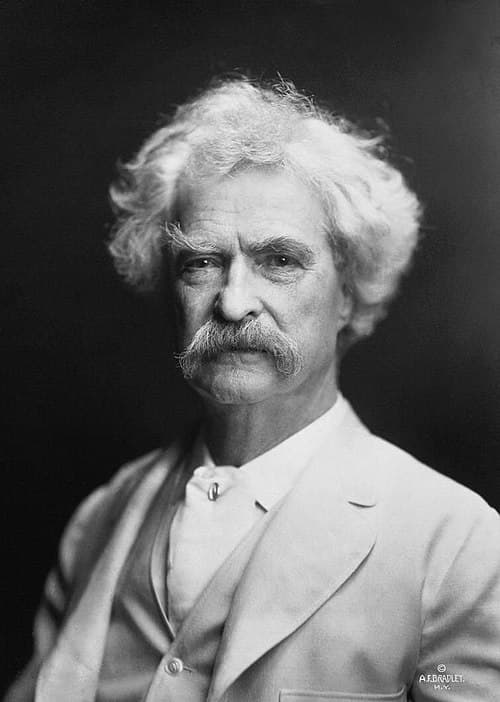
Mark Twain
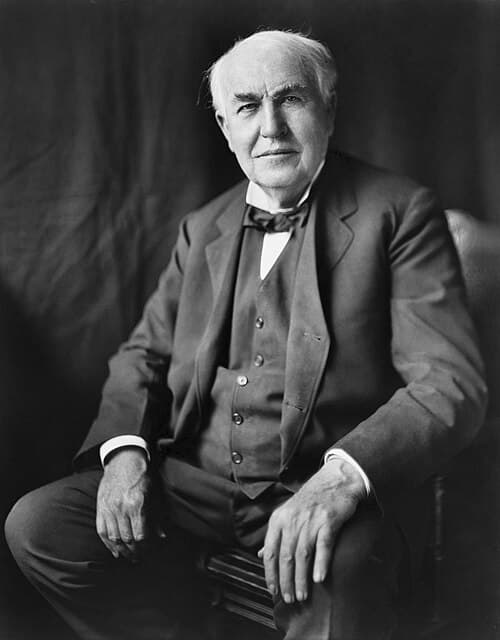
Thomas Edison

Sacha Baron Cohen
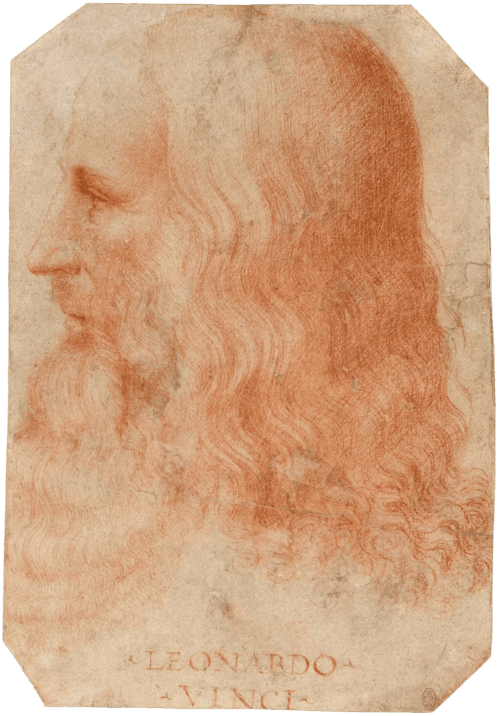
Leonardo da Vinci
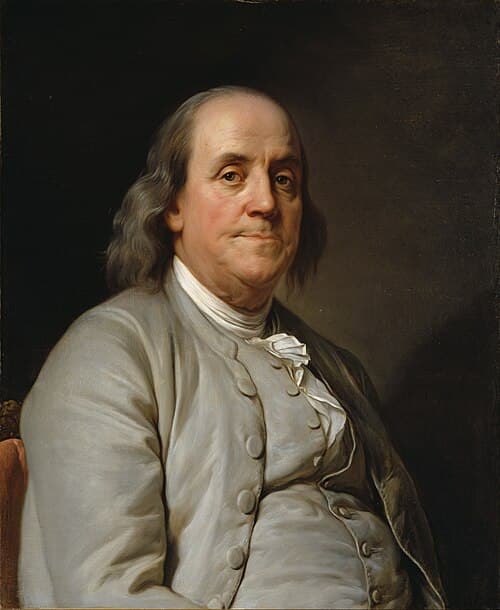
Benjamin Franklin

Tom Hanks

Celine Dion

Weird Al Yankovic

Adam Savage

Ryan Reynolds

Neil Patrick Harris

Amy Poehler

Voltaire

Conan O'Brien

Matthew Perry

Robert Downey Jr.
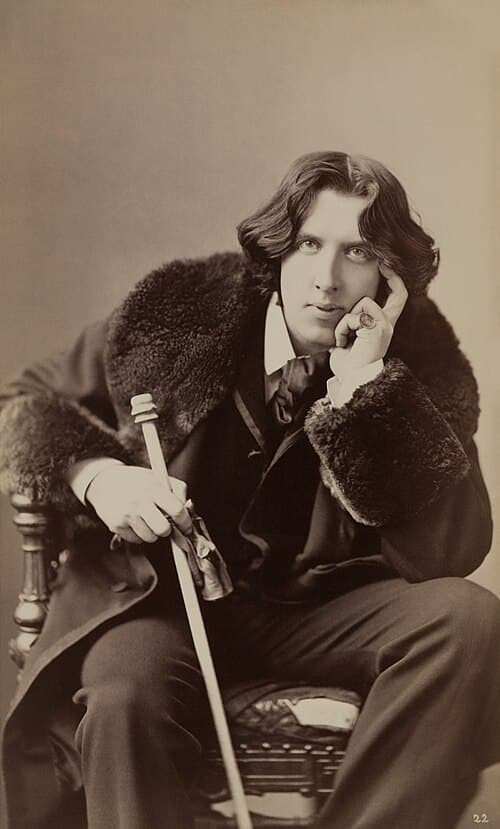
Oscar Wilde

Jon Stewart

Hugh Laurie
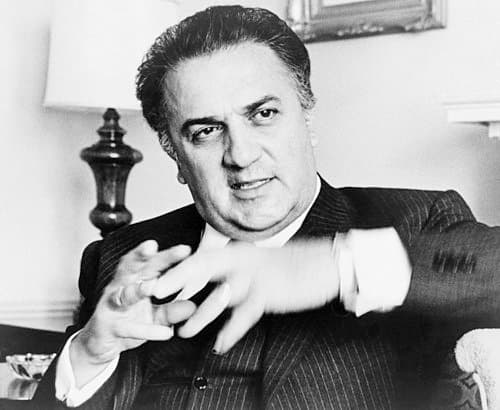
Federico Fellini
In the PRISM-7 framework, the ENTP profile is defined by maximum Openness (specifically the facets of Creativity and Inquisitiveness) combined with high Adaptability. This explains their hunger for novelty and ease with change.
Crucially, PRISM-7 reveals nuances MBTI misses via the Honesty-Humility dimension. ENTPs often score lower on the 'Sincerity' and 'Greed Avoidance' sub-facets—not because they are malicious, but because they view rules and social conventions as games to be gamified or bypassed. This creates the 'Trickster' archetype that MBTI struggles to categorize essentially.
Additionally, they typically show a split in Conscientiousness: very high 'Drive' (goal orientation) but very low 'Organization' and 'Prudence.' MBTI lumps these into 'P' (Perceiving), but PRISM-7 clarifies why an ENTP can be obsessively ambitious yet have a messy desk. Their Agreeableness is also complex: they often score low on 'Patience' (due to fast processing) and 'Gentleness' (due to bluntness), but can be high in 'Forgiveness,' as they rarely hold grudges, viewing conflict as theoretical rather than personal.
While MBTI is popular and can provide useful frameworks for self-reflection, the scientific community has identified significant limitations:
Poor Reliability
39-76% of people get a different type when retaking the test after just 5 weeks. Your "type" shouldn't change that often.
False Dichotomies
You're not "T or F"—personality traits exist on a spectrum. Someone scoring 51% Thinking is treated the same as someone scoring 99%.
Barnum Effect
Type descriptions are often vague enough that most people would agree with them regardless of their actual type.
The PRISM-7 Difference
- 85-92% test-retest reliability — your results stay consistent
- Dimensional scores — see exactly where you fall on each trait
- Confidence intervals — know the precision of your results
- Based on HEXACO+ — the most validated model in modern psychology
Ready for a More Accurate Assessment?
Discover your true personality profile with PRISM-7—the scientifically-validated evolution of personality assessment. Free, no signup required.
Take the Free PRISM-7 Assessment