Being worthless, without inherent value, or failing to impress
To be valuable, successful, admired, and affirmed
To be affirmed, to distinguish themselves from the crowd, to be the best at what they do, and to avoid the feeling of shame.
At the center of the Type Three psychology lies a profound and often unconscious heartbreak: the belief that love is not a birthright, but a wage earned through performance. Unlike types who fear the world is dangerous or chaotic, the Three fears that the self is fundamentally empty—a blank screen onto which value must be projected through tangible achievements. This drives a lifelong, high-octane engine of productivity, where 'doing' becomes indistinguishable from 'being.' To a Three, resting isn't just a pause; it feels like a cessation of existence. If they aren't winning, improving, or producing, they fear they are disappearing.
Threes are the chameleons of the Enneagram, possessing an uncanny, almost supernatural ability to read a room and embody the exact persona that specific environment rewards. This is not mere acting; it is a survival strategy rooted in high Adaptability (in PRISM-7 terms). If they enter a boardroom, they instinctively adopt the posture, cadence, and vocabulary of the executive. If they enter a spiritual retreat, they unknowingly shift to become the 'best' meditator in the room. This shape-shifting is driven by an internal radar constantly scanning for the metrics of success in any given ecosystem, allowing them to merge with the ideal image of whatever group they occupy.
While often stereotyped merely as workaholics, the Three's fixation is more nuanced: it is about 'image management' in the service of emotional survival. They are part of the Heart Center (along with Twos and Fours), which means their primary struggle is with shame. However, unlike the Two who moves toward people, or the Four who withdraws, the Three moves against shame by outrunning it. They suppress their own feelings to maintain efficiency, effectively putting their heart in a cryogenic freeze so its messy needs don't interfere with the trajectory of their ascent. They don't just want to be successful; they want to be seen as successful, because the admiration of others serves as a substitute for the self-love they struggle to generate internally.
The cognitive habit of the Three is 'identification.' They identify with their projects and successes to the point where a failure at work feels like a death of the self. This makes criticism devastatingly painful, often triggering a defensive grandiosity or a frantic attempt to reframe the narrative. They are the spin doctors of the psyche, capable of rationalizing any setback as a 'pivot' or a 'learning opportunity' before they have actually processed the emotional blow of the loss.
Levels of Health
At this level, the Three has dismantled the 'performance principle.' They are authentic, internally directed, and deeply connected to their own heart. No longer driven by a frantic need for validation, they pursue goals that align with their true values rather than societal standards of prestige. They possess a quiet, grounded confidence that doesn't require an audience.
The average Three is the quintessential 'High Performer' who is secretly running on anxiety. They are highly competent and driven, but their self-worth is now pegged to the stock market of public opinion. They begin to 'cut corners' emotionally, suppressing vulnerability to maintain a veneer of invincibility.
At the unhealthy level, the Three's fear of worthlessness becomes a desperate psychological emergency. The line between truth and fabrication dissolves completely. They may lie about credentials, steal credit for others' work, or sabotage colleagues to prevent being outshined.
Wings
This wing adds a strong dose of the Helper's interpersonal warmth to the Achiever's drive, creating a personality that is highly charismatic, socially fluid, and seductive. The 3w2 wants to be the 'Popular Star'—the person everyone loves and admires. They are more extroverted and emotionally expressive than the 3w4, often using their social intelligence to climb ladders.
The Four wing brings introspection, artistic sensibility, and a desire for uniqueness to the Three's ambition. This creates the 'Prestige' orientation. The 3w4 is less concerned with being popular and more concerned with being the best—the expert, the auteur, the elite.
Growth & Stress Paths
When the Three moves toward Six (The Loyalist), they undergo a profound shift from 'me' to 'we.' The solitary spotlight seeker realizes that true success requires a village. They drop the mask of omnicompetence and allow themselves to rely on others, asking for help and admitting they don't have all the answers. This movement is characterized by a surge in loyalty, community orientation, and a willingness to work for a cause greater than their own resume.
When the pressure to perform becomes unsustainable, the Three disintegrates toward Nine (The Peacemaker). This is the 'burnout' release valve. The usually energetic, laser-focused Achiever suddenly becomes apathetic, disengaged, and mentally foggy.
Think You're a Type 3?
Enneagram typing can be subjective. Get a more objective, dimensional assessment with confidence intervals that show where you truly fall on each trait.
Take the Free PRISM-7 AssessmentIn the romantic sphere, Threes are often the 'catch'—attractive, successful, and attentive. They approach dating with the same strategic competence they apply to their careers: they want to be the best partner you've ever had. They will plan the perfect dates, remember the anniversaries, and work hard to help their partner succeed in their own endeavors. A Three partner is often a cheerleader, pushing their significant other to maximize their potential.
Start-up Founder / Entrepreneur
The ultimate arena for the Three's ambition. It allows them to build an external manifestation of their internal value. The high risk/high reward environment feeds their need for tangible metrics of success, and the requirement to wear multiple hats utilizes their high Adaptability.
Corporate Attorney / Litigator
A high-status, competitive field where winning is binary and clearly defined. The performance aspect of the courtroom appeals to their theatrical side, while the intense workload validates their high Conscientiousness and stamina.
Brand Manager / PR Director
Threes intuitively understand how to shape perception. This role monetizes their natural obsession with image and audience reception. They excel at spinning narratives and crafting identities that the market (the audience) desires.
Surgeon
A pinnacle of competency-based careers. It offers high social prestige, requires absolute precision (Conscientiousness), and demands an ability to detach emotionally to perform under pressure—a natural coping mechanism for Threes.
Sales VP / Director
Sales offers the most direct feedback loop for a Three's self-worth: the leaderboard. The clear metrics, the competitive atmosphere, and the need to charm and adapt to clients fit their personality architecture perfectly.
Deep Dive: Type 3 Guides
Type 3 Learning Style
How this type learns best
Type 3 Career Guide
Best career paths and workplace advice
Type 3 Relationships
Love, dating, and connection
Type 3 Communication
How to communicate effectively
Type 3 Stress & Coping
Managing stress and building resilience
Type 3 Leadership
Leadership style and management
Type 3 Personal Growth
Development and self-improvement
Type 3 At Work
Workplace dynamics and team roles
Type 3 Compatibility
Type compatibility and pairings

Oprah Winfrey
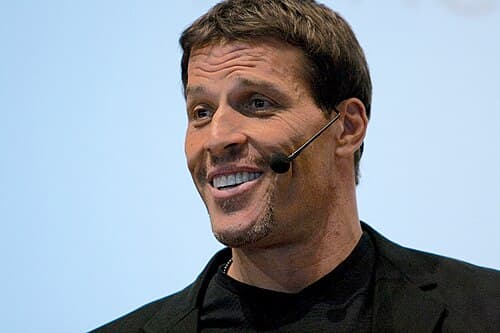
Tony Robbins

Taylor Swift

Tom Cruise

Dwayne Johnson

Will Smith

Muhammad Ali

Arnold Schwarzenegger

Lady Gaga

Bill Clinton

Tiger Woods

Madonna

Beyoncé

Michael Jordan
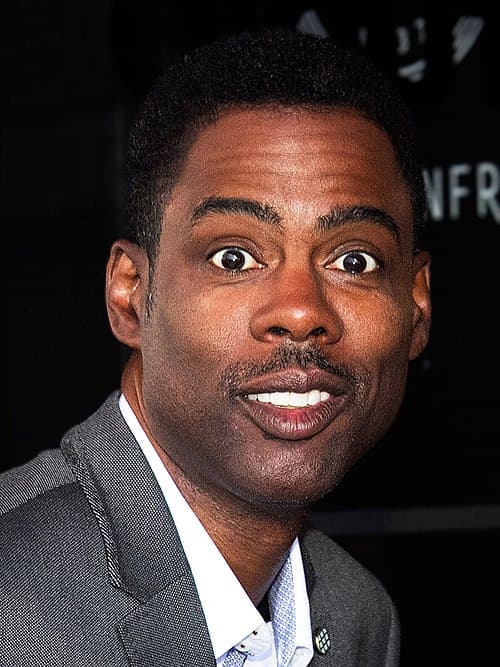
Chris Rock

Reese Witherspoon

Ryan Seacrest

Kris Jenner

Mitt Romney

Werner Erhard
The Type Three profile is powerfully illuminated by the PRISM-7 model, specifically through the interplay of Conscientiousness, Extraversion, and Adaptability, while highlighting a crucial struggle with Honesty-Humility.
-
High Conscientiousness: This is the engine room. Threes exhibit the organization, diligence, and perfectionism associated with this dimension, but PRISM-7 captures the drive behind it—the need for achievement as an existential prop.
-
High Adaptability: This is what distinguishes the Three from the rigid perfectionism of a One. Threes possess high psychological flexibility, allowing them to shapeshift to meet environmental demands. PRISM-7 identifies this as a strength (resilience to change) that can become a weakness (loss of self).
-
The Honesty-Humility Variable: This is the most critical HEXACO+ insight for Threes. While MBTI might just call them 'Judgers,' PRISM-7 reveals that lower scores in Honesty-Humility (common in average/unhealthy Threes) predict the tendency toward image management, status-seeking, and 'cutting corners' ethically. Growth for a Three is essentially a journey of raising their Honesty-Humility score—moving from performative status-seeking to authentic, humble engagement.
-
Emotional Resilience: Threes often test high here, but it can be a 'false positive.' They appear resilient because they suppress negative emotion (compartmentalization), not necessarily because they process it healthily. PRISM-7 allows us to distinguish between genuine stability and the Three's 'repressive coping' style.
While the Enneagram offers valuable frameworks for self-reflection and growth, the scientific community has identified significant limitations:
Limited Validation
Unlike the Big Five or HEXACO, the Enneagram has limited peer-reviewed empirical validation in academic psychology.
Subjective Typing
Determining your type often relies on self-reflection rather than objective measurement, leading to inconsistent results.
No Confidence Intervals
Results are presented as definitive types without acknowledging measurement uncertainty or borderline cases.
The PRISM-7 Difference
- Objective measurement — standardized questions with validated scoring
- Dimensional scores — see exactly where you fall on each trait
- Confidence intervals — know the precision of your results
- Based on HEXACO+ — the most validated model in modern psychology
Ready for Objective Personality Insights?
Discover your true personality profile with PRISM-7—the scientifically-validated evolution of personality assessment. Free, no signup required.
Take the Free PRISM-7 Assessment